DREAM ISSUE EXCLUSIVE: ARTIST AIRCO CARAVAN TURNS CONSUMER CULTURE INTO PROTEST ART – EXTENDED INTERVIEW
Airco Caravan makes protest art disguised as irresistible consumer products. Cast in translucent resin and saturated with candy-colored pinks, greens, and oranges, her oversized spray bottles promise instant solutions to racism, misogyny, abortion bans, fascism, and other forces she would happily eradicate. Their seductive surfaces and sharply written labels turn the familiar language of advertising into something subversive, playful, and unapologetically political.
Born in the Netherlands and now working between Amsterdam and New York, Caravan studied at HKU University of the Arts Utrecht before pursuing screen printing at MK24 in Amsterdam and oil painting at The Art Students League of New York. Following a career in advertising and graphic design, she returned to fine art with a visual language shaped by slogans, commercial packaging, wordplay, and the persuasive power of color. Her work has been exhibited internationally and belongs to museum collections including the Amsterdam Museum, Nobel Prize Museum, National Civil Rights Museum, and Center for the Study of Political Graphics.
At the center of her practice is a deceptively simple proposition: What if the products required to create a better world actually existed? Humor provides the invitation, but hope remains the point.
You were born in the Netherlands and now divide your time between Amsterdam and New York. How has living and working between these two cities shaped your perspective as an artist?
Amsterdam was a great place to live until I traveled to New York City in the nineties. Suddenly, I realized “it” happens in New York, not Amsterdam. It was the vibe. It is in the air. I knew it the moment I set foot on the concrete pavement of downtown Manhattan. It hit me, and I fell in love instantly.
Through the years, after many visits and self-organized artist residencies, I studied oil painting at The Art Students League of New York. The next step was to actually follow the dream and live in New York City. Although national politics are frighteningly fascist, New York City is still a gem, with our amazing mayor, Zohran Mamdani.
Before returning to fine art, you worked in advertising and graphic design. How has that background influenced the visual language of your work?
It is a bit like a U-turn. After working full-time as an art director and later as a freelancer, I started screen printing and painting again. I tried abstraction, but that is not my biggest talent.
I created a series of oil paintings of motel rooms, colorful vintage rooms where horrible murders had taken place. Each room was tidy, like a photograph in an advertisement, but the works carried titles such as “Lying in a Pool of Blood,” taken from newspaper headlines about motel murders. Fun fact, although not for me: people who wanted to buy a nice painting suddenly hesitated when they read the title.
Next was a series of unusual murder weapons, everyday objects that had been used to kill someone. The stories were crazy. A corkscrew, an ironing board, even a prosthetic leg. There was always a twist in the work, which came from my advertising background.
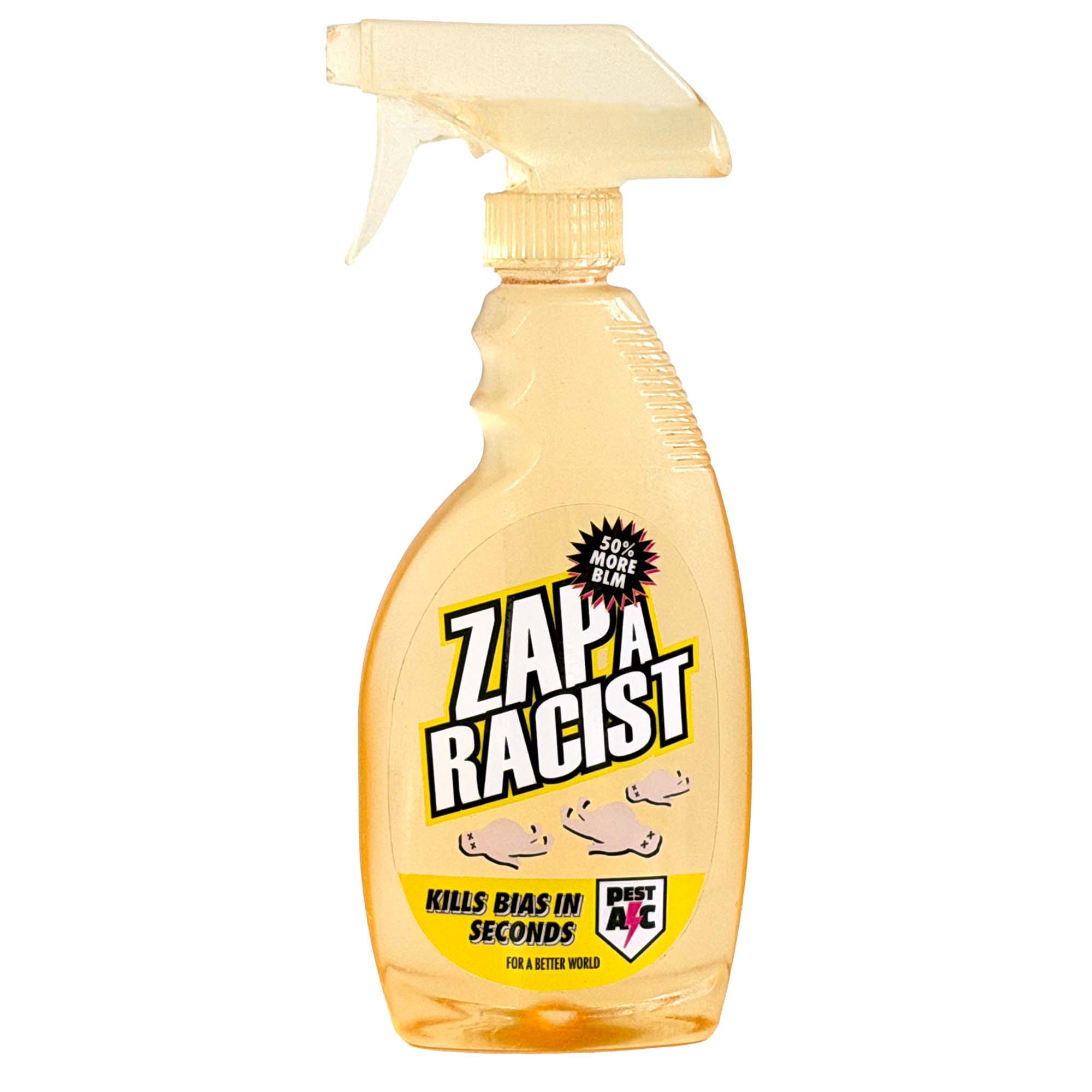
Your “Pest AC: For a Better World” series began after you bought a can of Raid to deal with roaches in your New York apartment. How did that everyday encounter evolve into a collection of nearly 400 imaginary products?
The can of Raid was very effective. A few days later, a thought came into my mind: Wouldn’t it be nice if we had a product against all the nasty things in the world? That is how it started. There are so many bad things happening that I could go on forever.
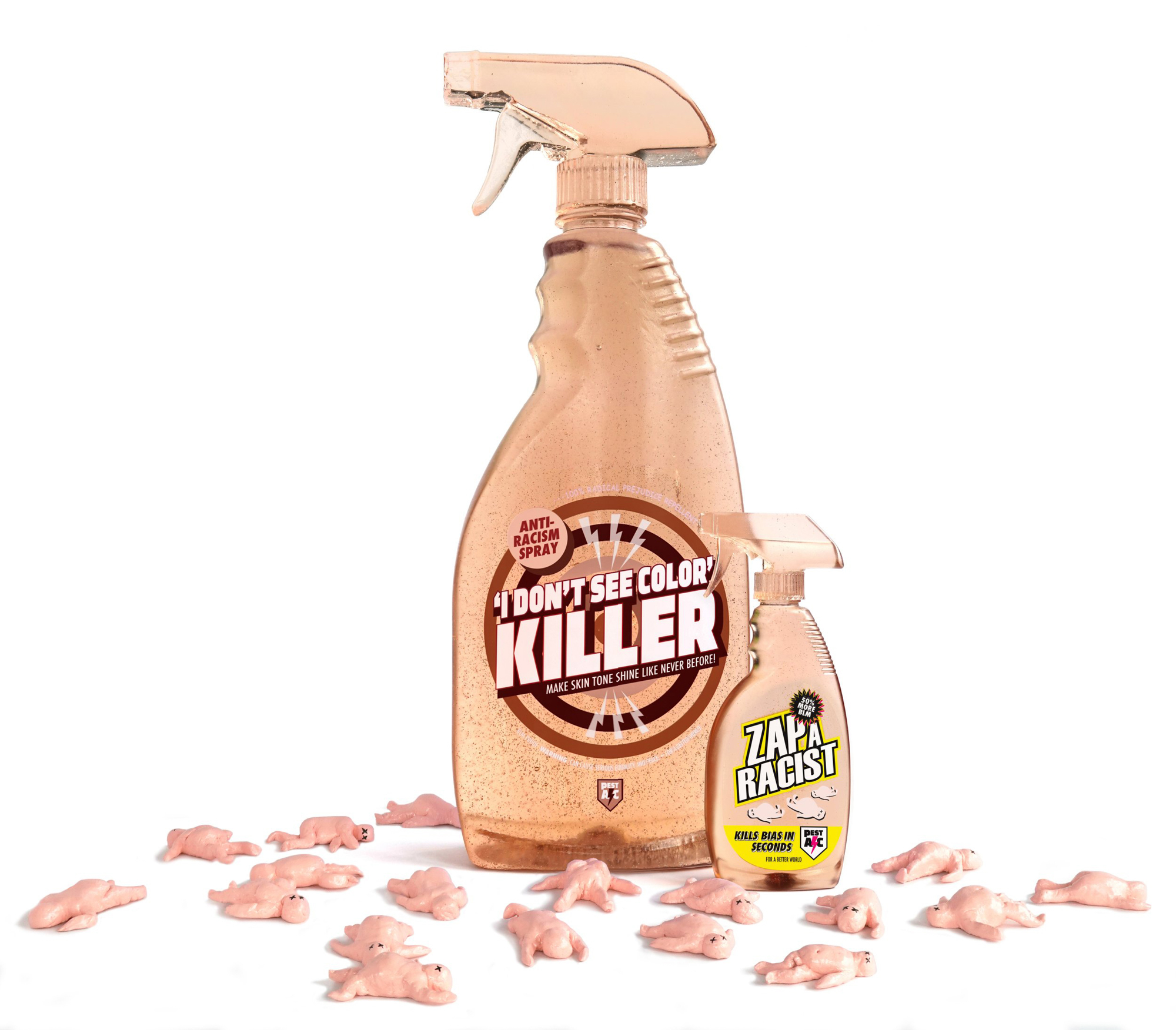
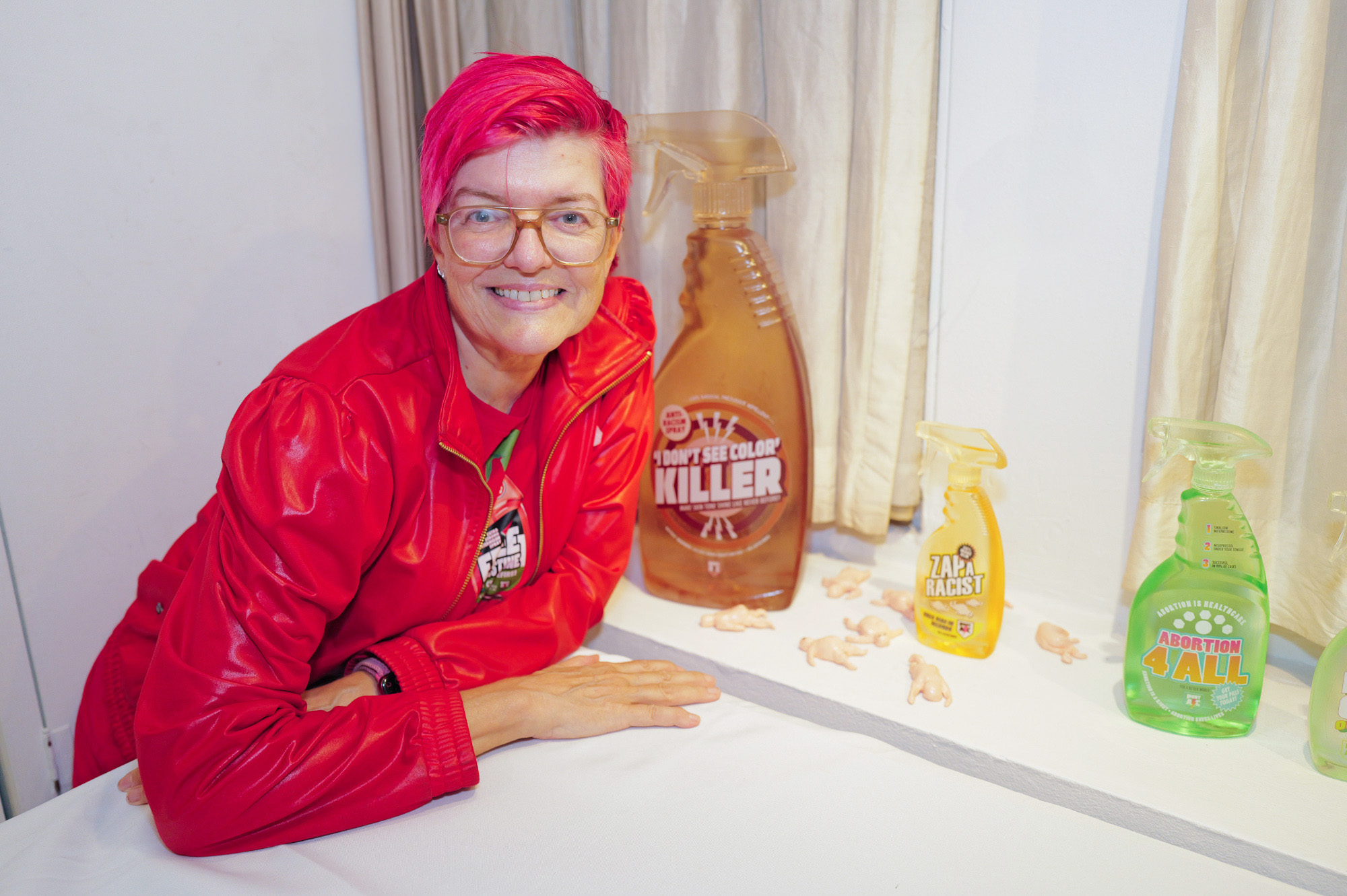
The series also reads like a diary. I began it at the end of 2022, and the first can I designed was “Zap A Racist.” Number six was “Dump Trump.” I saw it coming long before his re-election, but the product did not work as well as I had hoped.
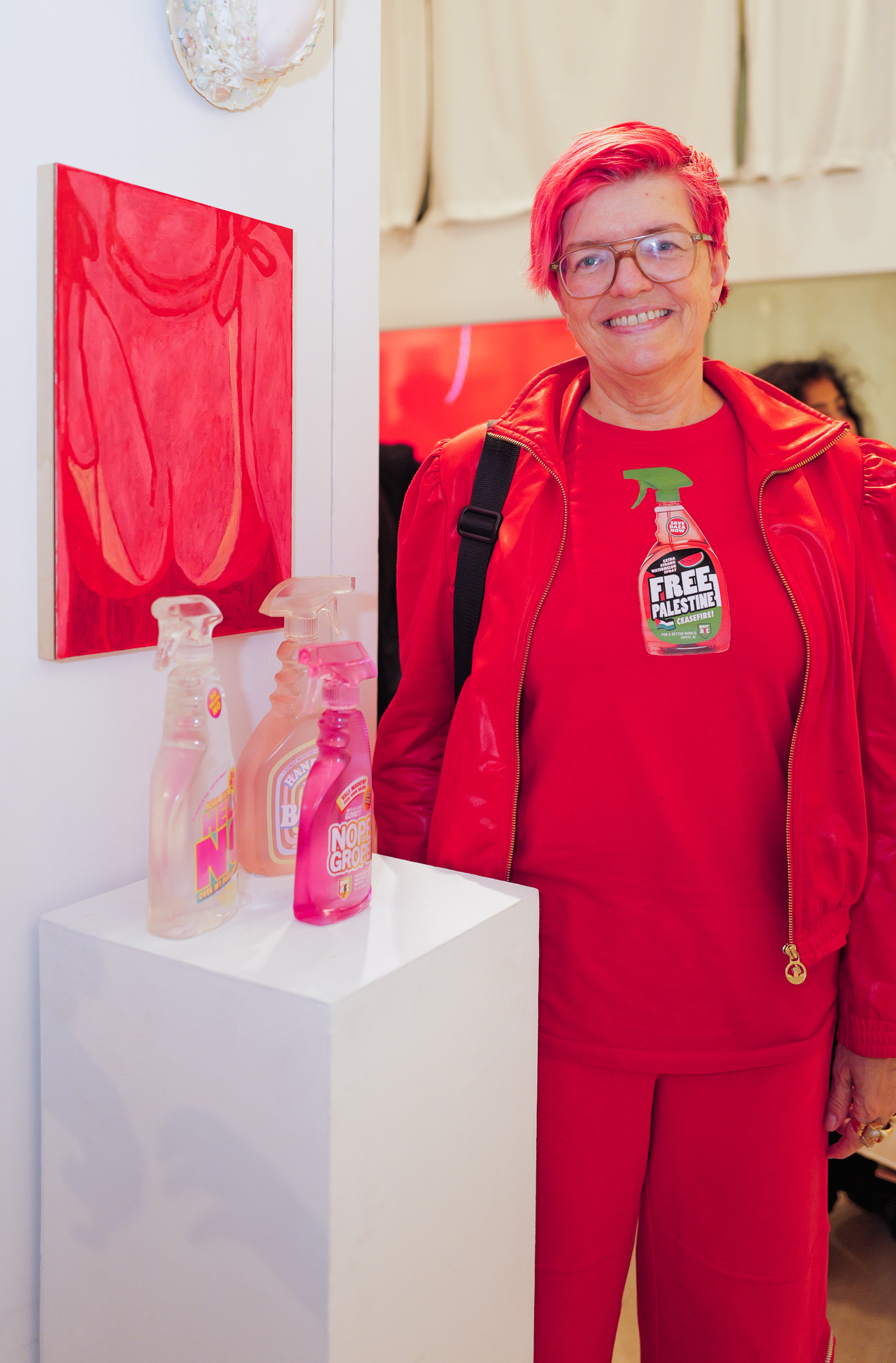
There is also “Free Palestine.” The genocide did not start on October 7. I created the can six months before that date to remember the Nakba on May 15.
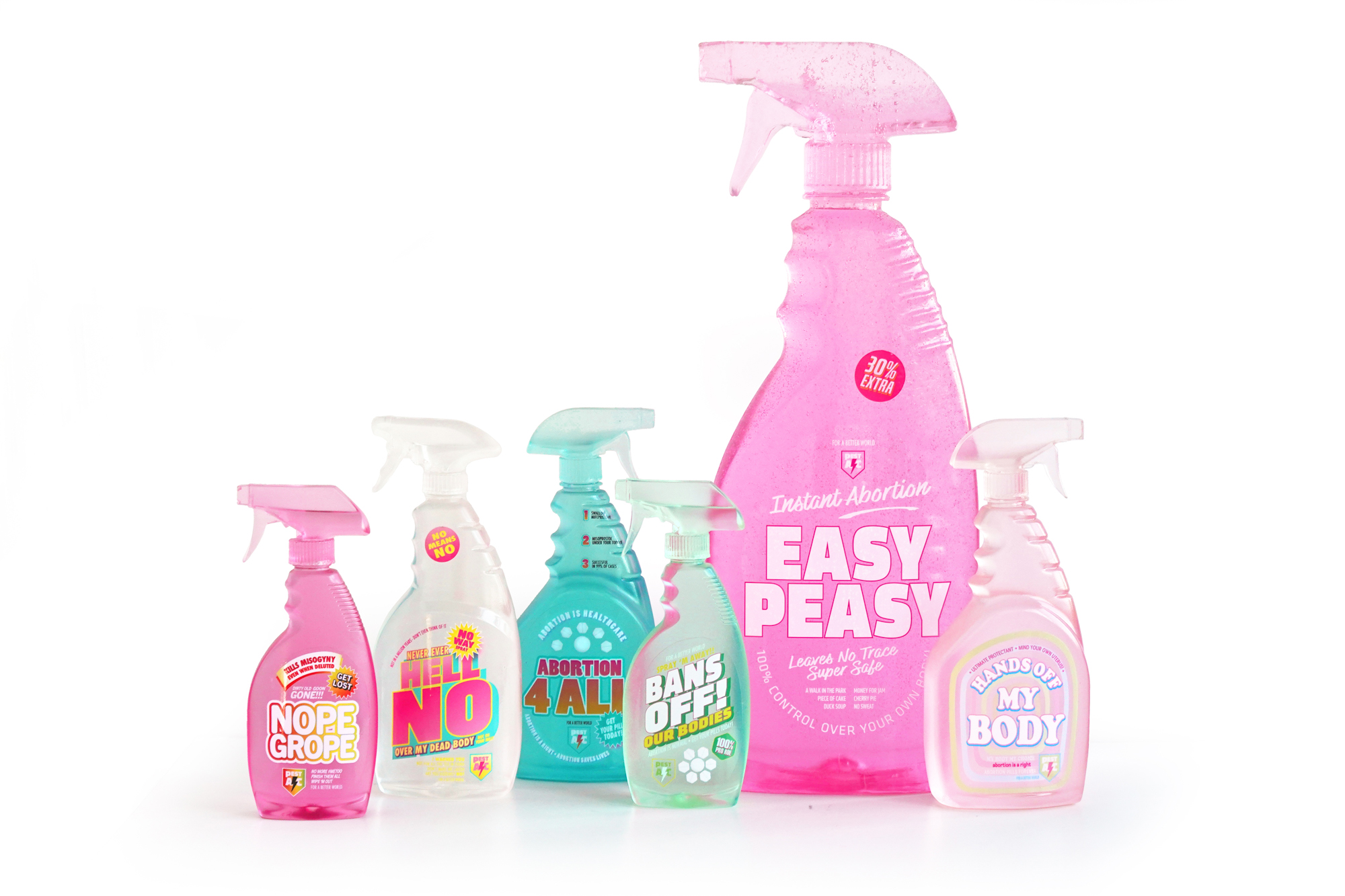
A major subject is women’s rights. We, the majority of the world’s population, are not equal to men, and our rights are under pressure. Women die because of abortion bans. It is horrific. Femicide, patriarchy, rape, misogyny, deepfake pornography, bodily autonomy: I have created products addressing all of these issues. There are also strong protective products in the series, especially for queer and trans people.
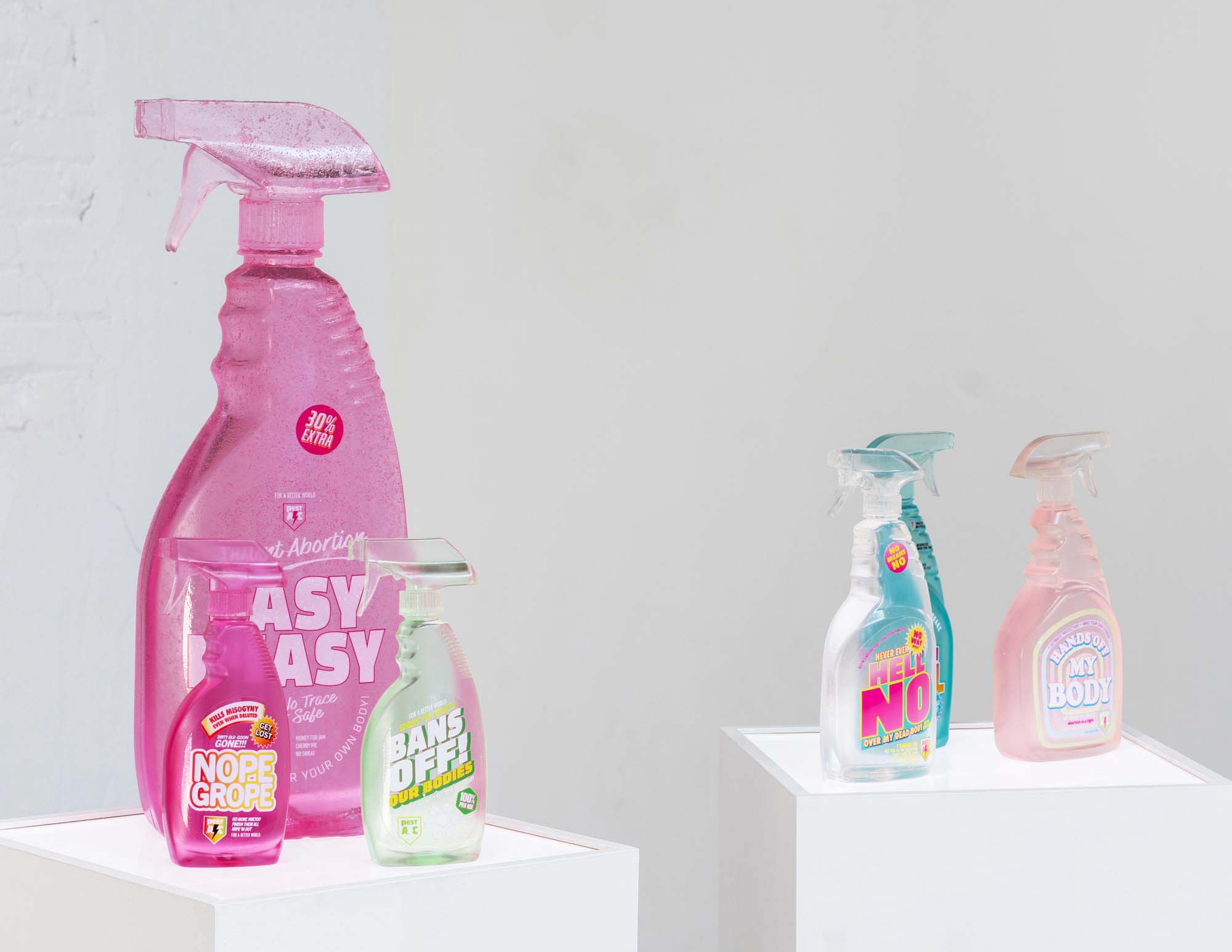
The sculptures look playful and seductive at first, but their messages confront racism, misogyny, reproductive rights, fascism, and other urgent issues. How important is that tension between visual pleasure and political discomfort?
I always try to make the work somewhat playful. Otherwise, I would become very depressed. Sometimes it is more in your face because the time when you could send a hidden message is over.
My pleasure is putting nasty jokes in the fine print on the labels. They are ironic and teasing, kicking the butt of power while always supporting marginalized groups. I like playing with this tension through words, styles, fonts, and colors.
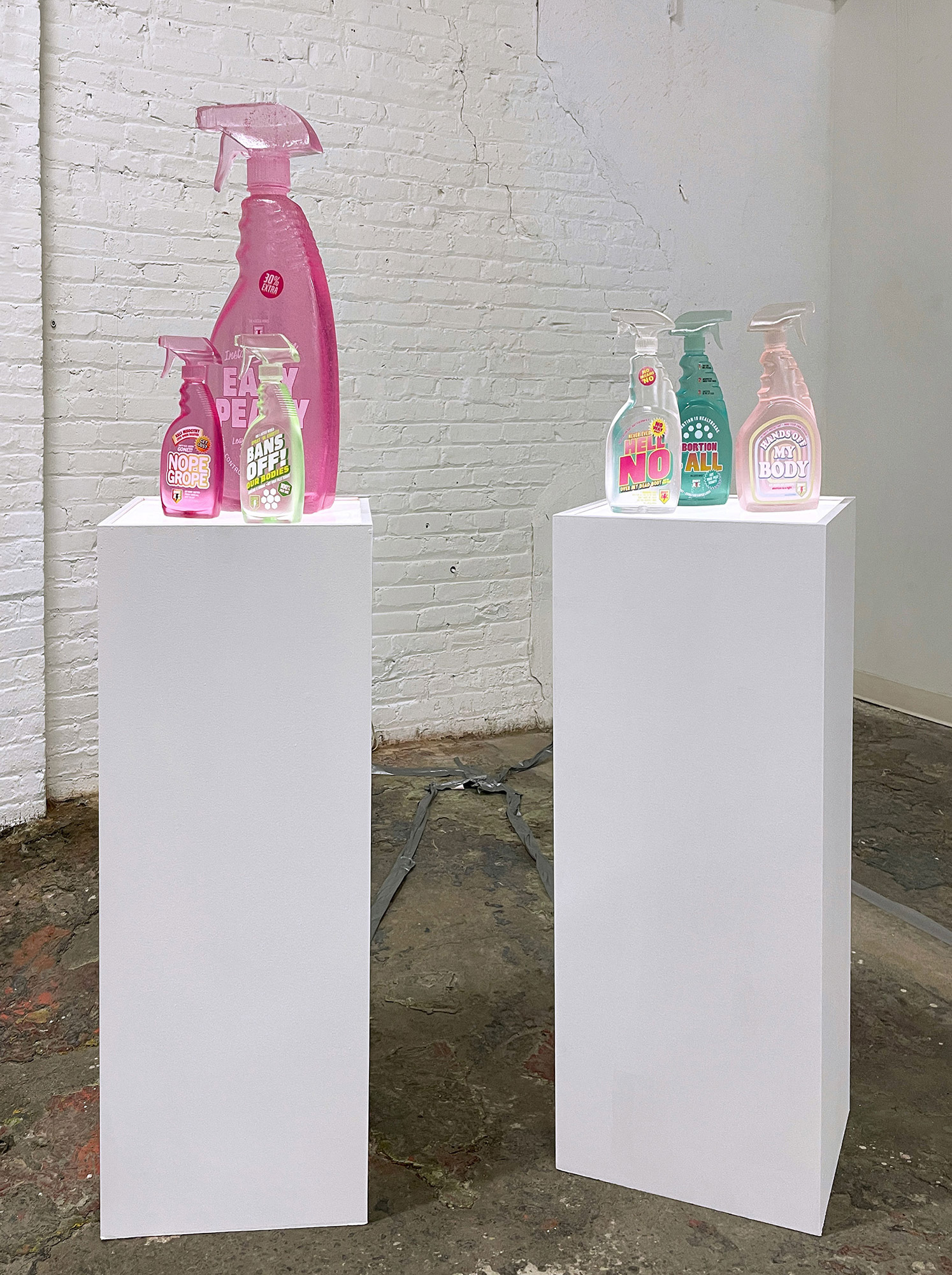
Designing the labels is my happy place, but it is also a way to cope with the world we live in. When people see my art, they are initially attracted to the colors. The transparent pastel resin spray bottles are eye candy. At a closer look, the viewer discovers the message.
There are two kinds of viewers: those who love it and agree, and the other group, the “bad guys,” whom I hope to reach and make think.
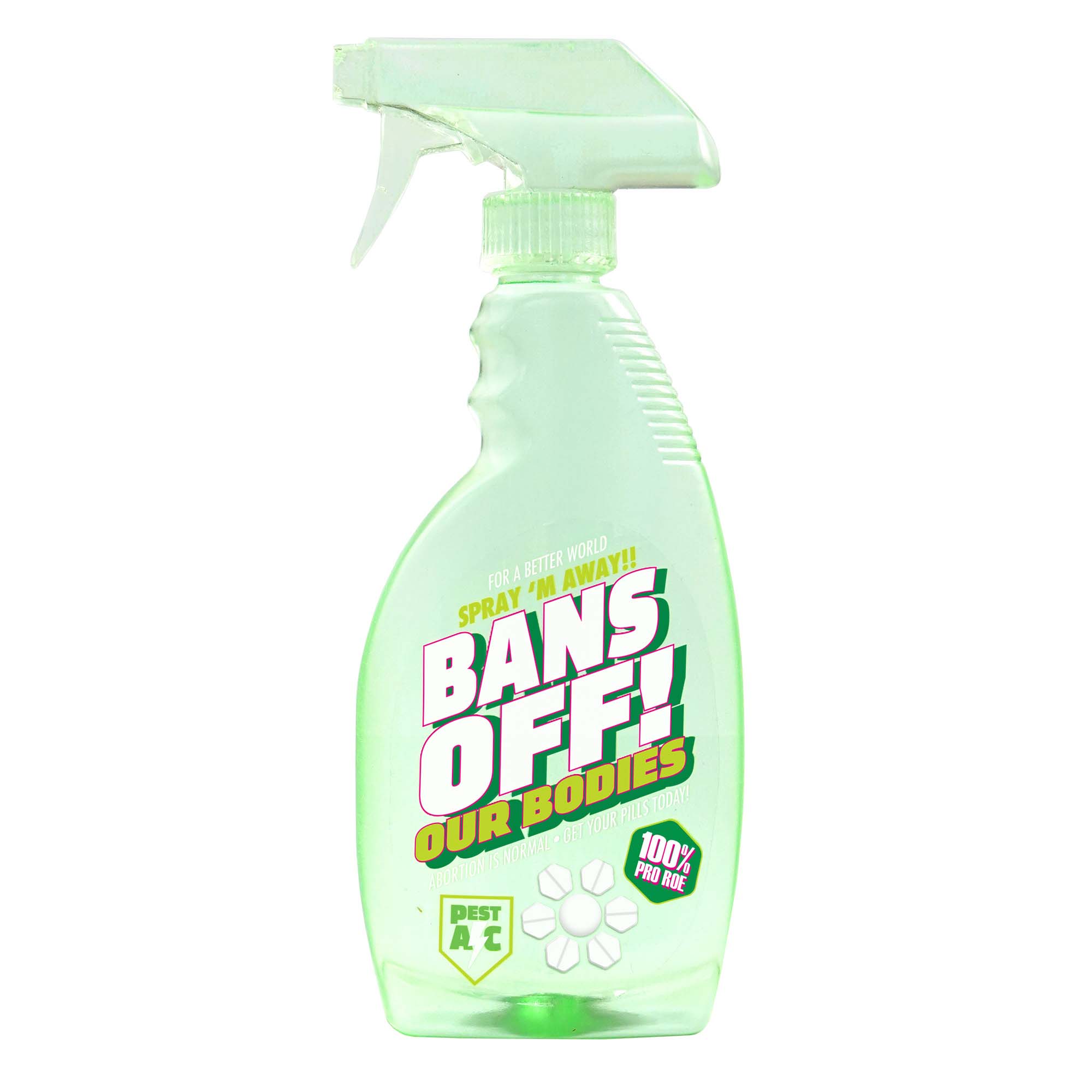
There is so much wit in titles such as “I Don’t See Color Killer,” “Nope Grope,” “Easy Peasy,” and “Bans Off Our Bodies.” How do you use humor to engage people with subjects that are often painful or polarizing?
Humor is the best way to address difficult issues. Life is hard and heavy for so many people, and making people smile offers relief for everyone.
At the FEMME Art Fair in Washington, D.C., I had to bring the spray can “Dump Trump” from 2022, “Easy Leak: 100% Release Epstein Files Grime Scrub” from 2025, and “Leather Clean, No. 1 Prick Remover,” referring to the couch-fucker vice president, from 2025.
We have to speak up. This is my way of doing so. People loved it, and it makes me happy when I see people smile. It brings hope.
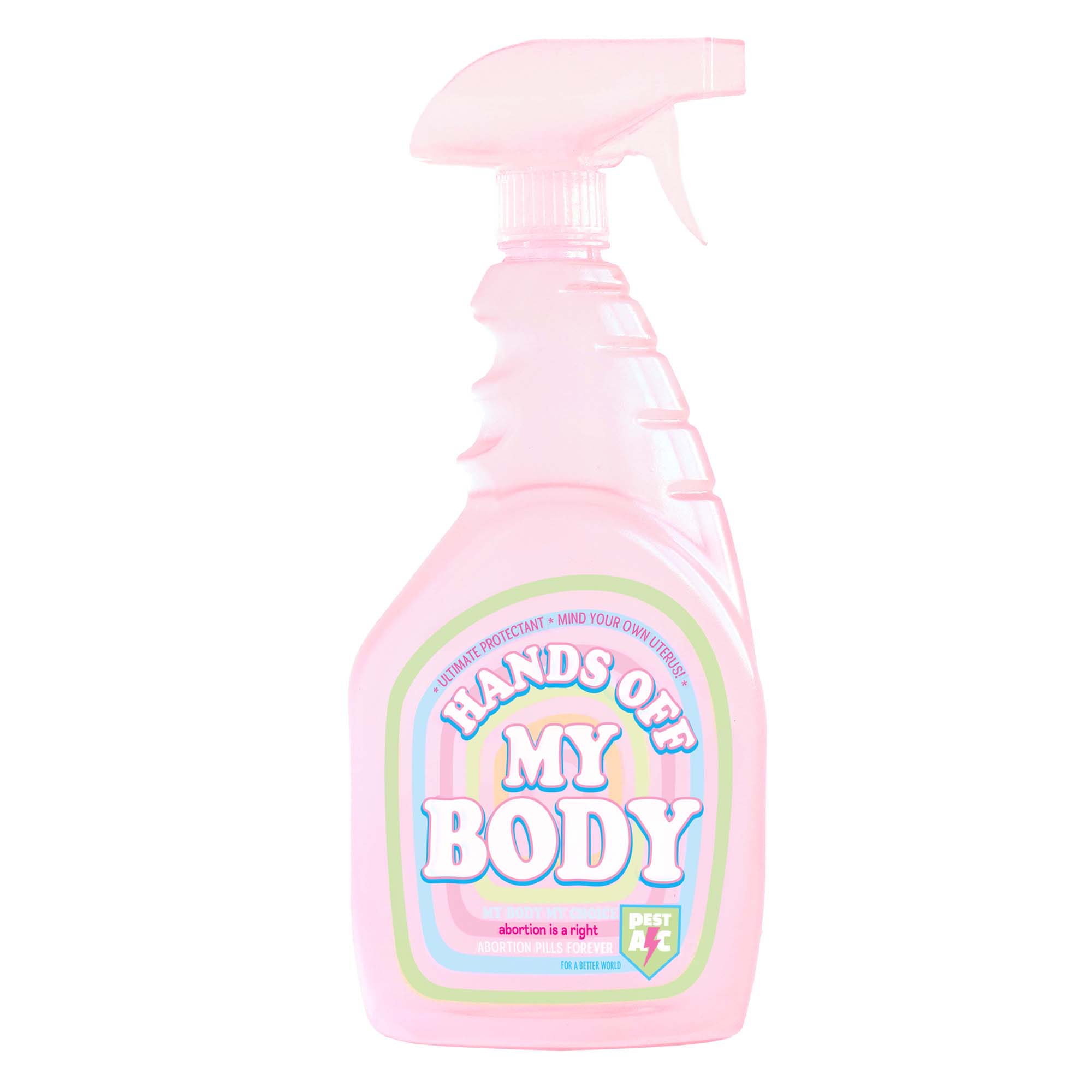
Why did you choose cleaning products and commercial packaging as the language for this body of work? What interests you about transforming familiar consumer objects into tools of protest?
It is a feminist statement. Before I began this series, I used plastic buckets as frames for my oil paintings of cleaning products and created rubber gloves folded into raised fists with fake nails. I transform the tools we are expected to use in our traditional roles as housewives into symbols of resistance and empowerment.
Your works move between resin sculpture, found products, textiles, illuminated displays, public interventions, and performance. How do you decide which material or format best expresses a particular idea?
It is fluid. The products printed on the wall tapestries look a bit like a supermarket. The woven wall tapestries are “war rugs” inspired by rugs made by Afghan women in the 1980s. I started creating them in 2017 and translated them into the present day in the Western world.
I made a war rug to honor Hind Rajab, the young Palestinian girl who was brutally killed by the Israeli army. The family car in which she was sitting among her already deceased relatives, the ambulance that came to rescue her, and the tank that fired 355 bullets are all shown in the wall tapestry. In the center is a portrait of Hind with her angel-like face. It is heartbreaking. There is no humor here.
The found objects cast in resin form a series that adds to the history of Dutch colonialism in New York. Everybody knows New York was founded by the Dutch and was once called New Amsterdam. I began reading about it and learned that this history is full of atrocities. The Dutch massacred the Lenape in the cruelest ways, including the Pavonia Massacre in 1643 and the Pound Ridge Massacre in 1644. Dutch plantations in New Netherland also relied on enslaved labor. Africans were transported to the “New World” and treated like cattle. It is too horrific even to mention. I feel guilt and shame as a white Dutch person.
I learned about the African burial grounds. There is the African Burial Ground National Monument in downtown Manhattan, where thousands of enslaved people were buried, but there were many more burial grounds. While white colonists were laid to rest in well-maintained churchyards, enslaved Africans, as well as enslaved Indigenous people, were buried somewhere at the back of the plantations.
Many of those places have been lost because enslaved people were not permitted to have gravestones. It was even forbidden to mourn in public. Centuries later, burial grounds were discovered during construction. Some locations now have memorials, while others remain beneath buildings or parking lots.
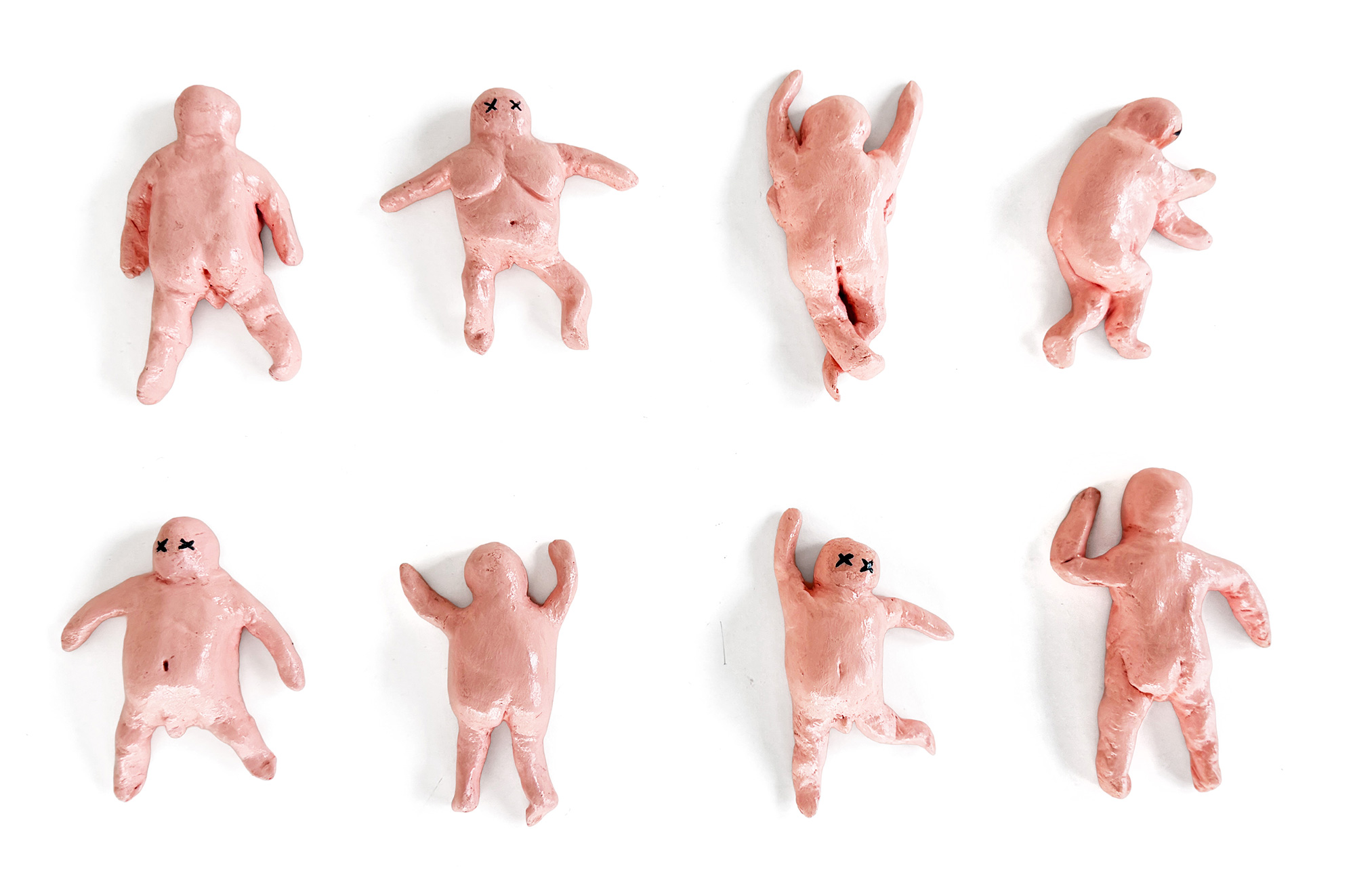
I collect stones, candy wrappers, and other materials from these locations and cast them in resin objects. Together, the objects will connect points on a large wall tapestry depicting New York City and locations north along the Hudson River. We have to tell the entire history, not only the portion the former colonists prefer, which was the portion I learned in school. The series is titled “If We Could Change History.”
You have taken your work beyond traditional gallery spaces through guerrilla projections, protest actions, public murals, and the unauthorized placement of a four-foot bronze statue of Dr. Martin Luther King Jr. What does working in public space allow you to do differently?
Without approval, you can actually do whatever you want. There are basically two reasons to work this way. You can act swiftly, react to current affairs, and make a statement. If you apply for grants, it takes forever, sometimes months or years. You also have to meet the requirements, and someone else decides whether the things you propose or create are “arty” enough. You become dependent on someone else’s vision, which is often not your own.
That is how the statue of Martin Luther King Jr. was realized. Initially, the municipality of Amsterdam agreed to develop a statue. The MLK Park in Amsterdam carries his name, but there was no monument at all. I had everything prepared. Then, after half a year, they suddenly decided to eliminate the project.
I was very disappointed, so the next day I decided to continue anyway, at my own expense and without permission. It was nerve-racking to install the statue in broad daylight. On January 15, Dr. King’s birthday, we drove into the park in a van and started drilling, which made a terrible noise. After an hour, the bronze statue had been installed in rock-hard concrete, and we had not been arrested.
It was a Dr. King-style act of civil disobedience honoring his fight for civil rights. More than six years later, the statue is still standing strong, and visitors to the park cherish him. Working in public space also reaches more people who would not normally visit a gallery or museum.
Your latest works revisit nineteenth-century “Female Pills” bottles and the history of abortion before the Comstock Act. What drew you to this history, and how are you reimagining it through the new sculptures?
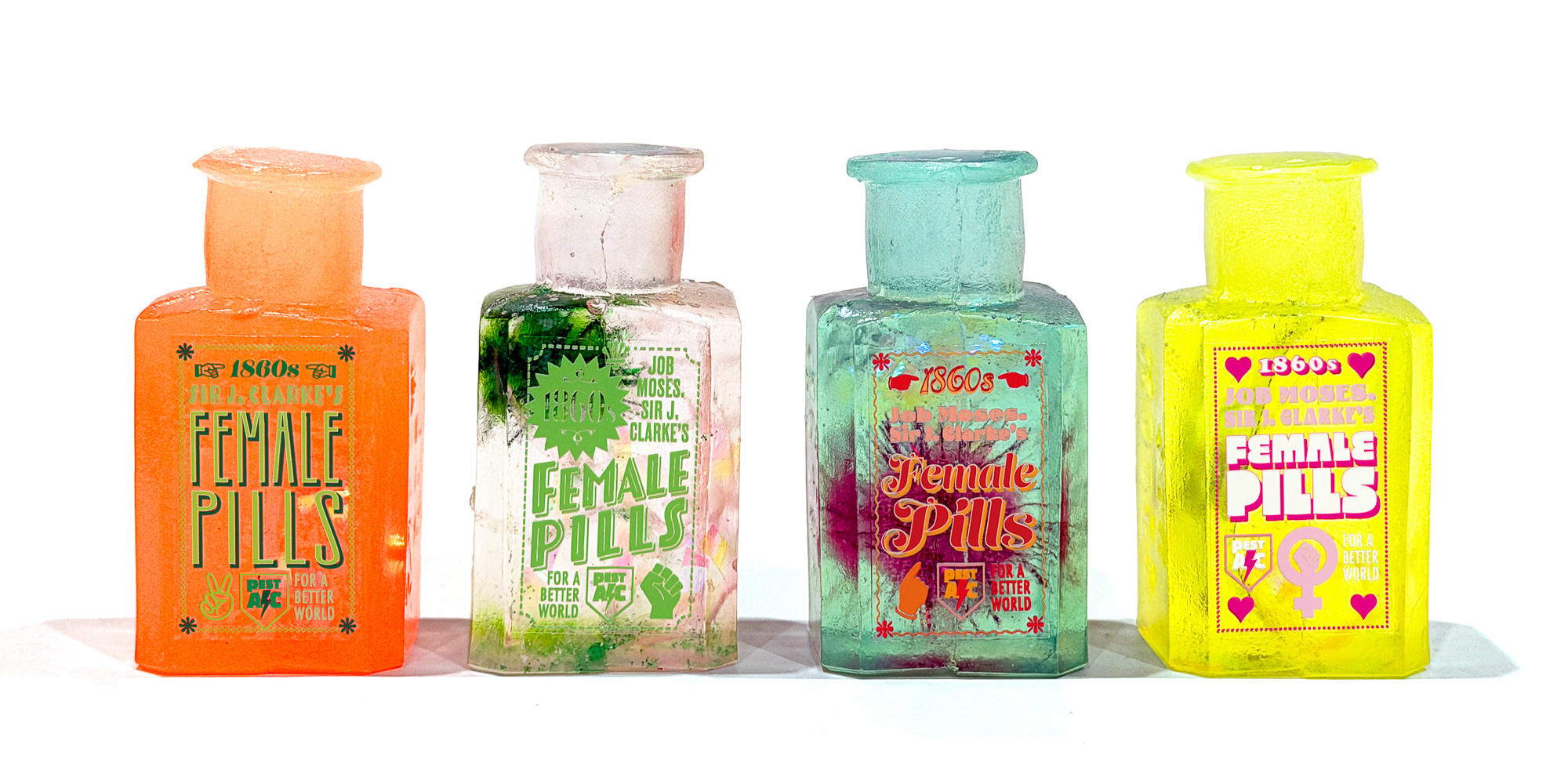
It was a coincidence. I did not know about “Female Pills.” I was searching for glass ink bottles from the 1850s for another project when a Job Moses bottle appeared. I learned that “Female Pills” by Sir J. Clarke were legal and available in stores in the United States.
They were advertised with the warning, “Don’t use the pills in the first trimester of a pregnancy because they will cause a miscarriage.” That was a clever way to say it. It is unbelievable how far we have turned back the clock.
I made a mold of the small bottle, cast it in transparent resin in beautiful colors, and created new labels bearing the name “Female Pills.” In some of them, I included a real abortion pill. The works are a protest against abortion bans.
For our DREAM Issue, we are exploring dreams as spaces for imagination, transformation, and visionary futures. If your products could truly work, what would your dream of a better world look like, and what do you hope art can do to help move us toward it?
One of my 21-inch-high, 13-pound solid resin spray bottles bears the label “WORLD PEACE.” That is what I dream of.
It also refers to the Miss Universe pageants. I remember that, when I was a child, these beautiful women were ridiculed because they always dreamed of “world peace.” How right they were! Yet in this sexist, misogynistic patriarchy, these young women were seen as “dumb blondes.” It is a questionable contest on many levels anyway.
The label is an ode to all women: women who stand up and women who help other women. While men try to destroy everything through greed and hate, women ultimately make the world turn.
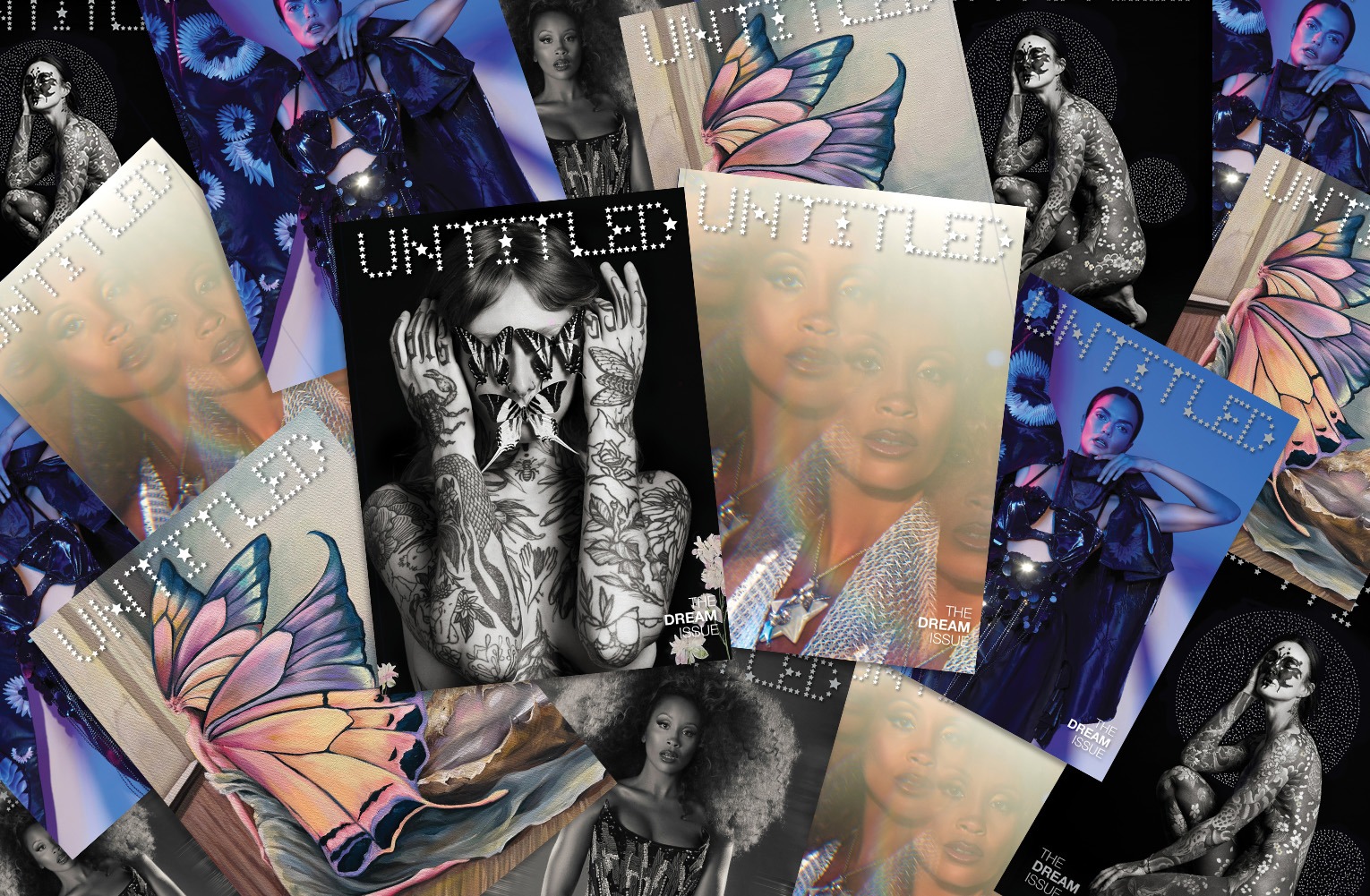
Airco Caravan is currently featured in The Untitled Magazine’s “DREAM” Collector’s Print Edition and the accompanying “DREAM” Exhibition at The Untitled Space in New York City, celebrating contemporary artists whose work explores imagination, possibility, and visionary perspectives. Discover her work in the exhibition and order your copy of the magazine through the links below.
-
Explore the exhibition: The DREAM Exhibition
-
Shop the print edition: The Untitled Magazine Boutique