DREAM ISSUE EXCLUSIVE: BRITT HARRISON ON REFLECTIONS, MEMORY, AND EVERYDAY MAGIC
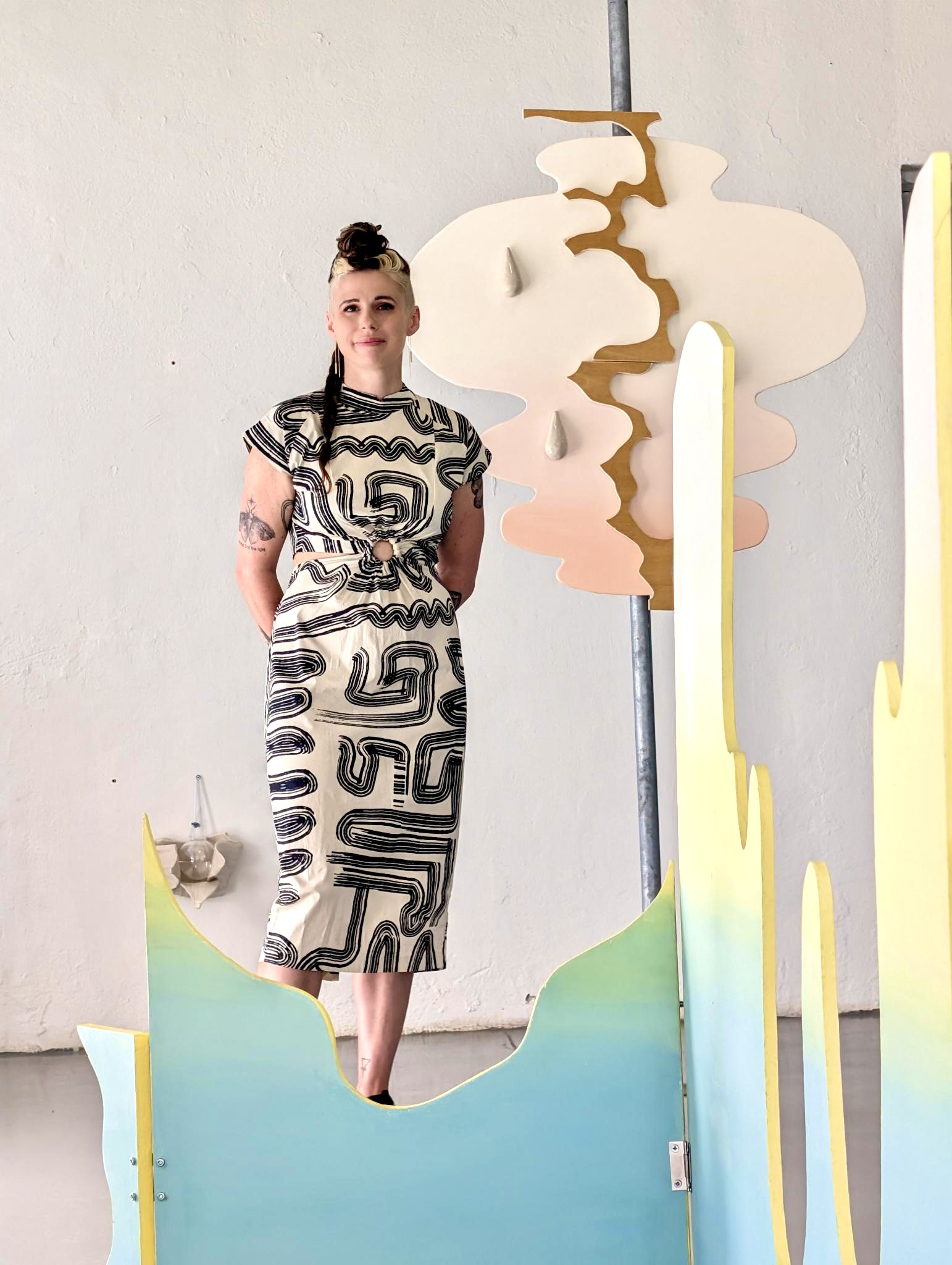
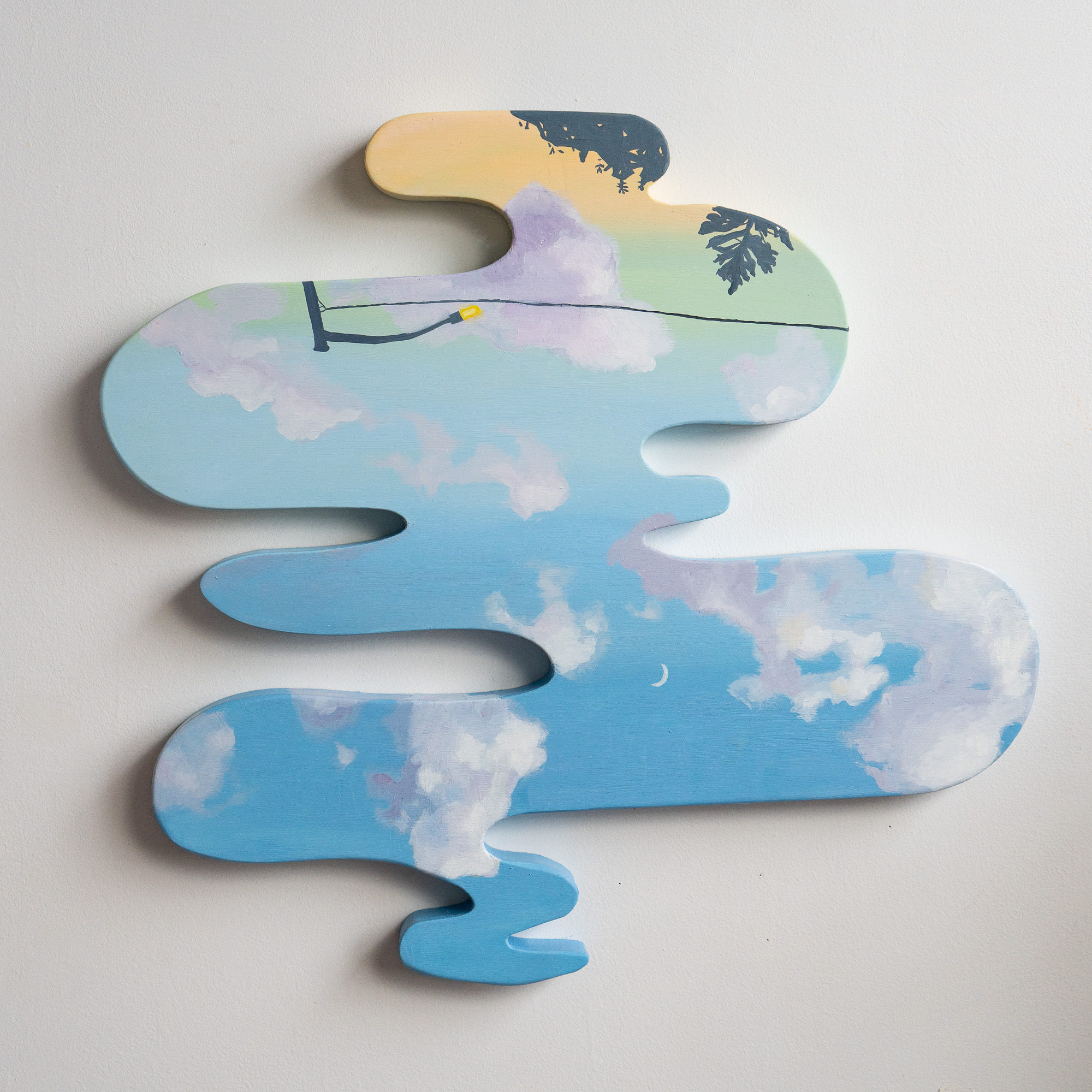
For Brooklyn-based artist Britt Harrison, dreams begin with the perceptual shifts of everyday life: reflections that reverse a landscape, summer heat that blurs the horizon, or changing light that makes a familiar place feel unfamiliar. Her paintings translate these experiences into fluid silhouettes, soft gradients, and custom-shaped wood panels, exploring how observation becomes entangled with memory and imagination.
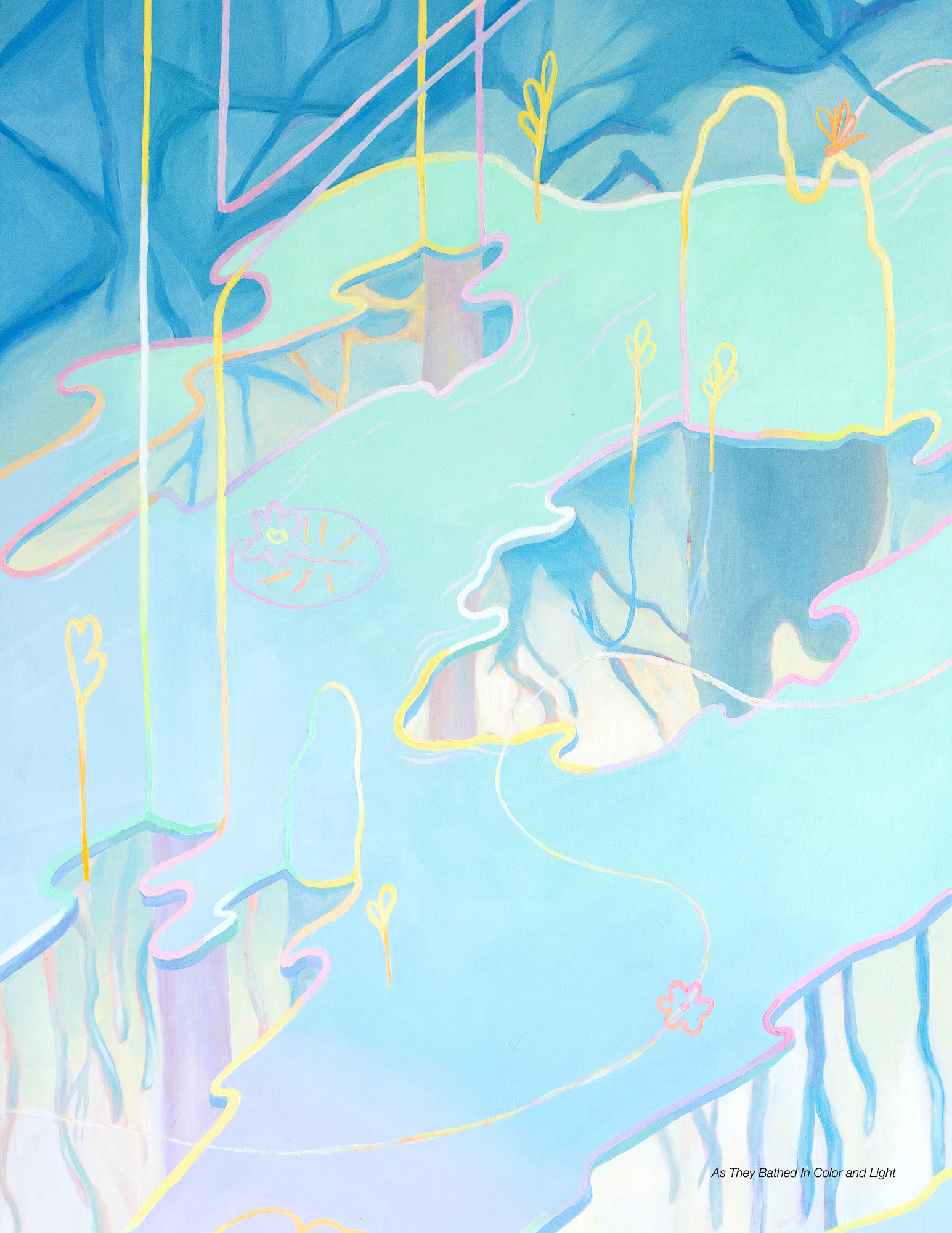
Originally from North Carolina, Harrison draws on an enduring connection to rivers, lakes, and the coast, alongside her education in painting and psychology. Water runs through her practice as both a physical presence and a means of transformation, offering a way to consider identity, emotional experience, and the unconscious. In works such as As They Bathed in Color and Light, reflections suggest the distance between the self we present and the complexity beneath the surface. Elsewhere, her sculptural panels isolate the contours of shadows and moving water, bringing the surrounding wall and cast shadows into the composition.
In this exclusive interview for The Untitled Magazine’s “DREAM” Issue, Harrison discusses the development of her visual language, her interest in Jungian psychology, and the fleeting encounters that inspire her work. Throughout the conversation, she considers painting’s capacity to extend a moment—and to preserve the sense of possibility that comes with seeing something familiar anew.
Your work has a distinctive visual language combining fluid silhouettes, soft gradients, simplified linework, and dreamlike imagery. How did this vocabulary develop?
My visual language pulls from both the natural world and contemporary visual culture, particularly graphic design. I’m constantly looking at gradients in the sky, reflections, shadows, and shifts in light, as well as the simplified ways images are communicated through design.
I don’t want to recreate the world exactly as it exists. I want to distill it into something more idealized, suspended between reality and imagination. The gradients mimic changing skies and light moving across water, while the linework becomes removed from organic representation. I like the tension between something recognizable and something invented.
Water is central to your practice as a symbol of transformation, reflection, and spiritual grounding. How has your relationship with it, from growing up in North Carolina to living in Brooklyn, shaped your work?
I grew up surrounded by nature in North Carolina, with rivers, lakes, and the coast all playing a part in my life. Being near water grounded me before I recognized it as a practice. Swimming, sitting beside it, or watching it move slows my thoughts and creates clarity.
Living in Brooklyn changed that relationship. I notice water in fleeting ways: a puddle reflecting the sky, the East River between buildings, or a glimpse of the Hudson. That distance has made it more precious and increasingly present in my work.
Your paintings often begin with fleeting encounters: clouds reflected in puddles, birds passing over water, shifting light, or mirages in summer heat. Why preserve these transient moments?
The natural world is constantly changing. Clouds shift, light moves, and suddenly the sky you were looking at no longer exists. These moments are quiet markers of time.
Painting extends the experience. I can take something lasting only seconds, a reflection, a shadow crossing water, a color in the sky, and spend weeks with it. It is a practice of appreciating a moment while I’m still inside it, rather than only after it is gone.
How do you design and create your custom-shaped wood panels? How does moving beyond the rectangular canvas change the work’s relationship with its surroundings?
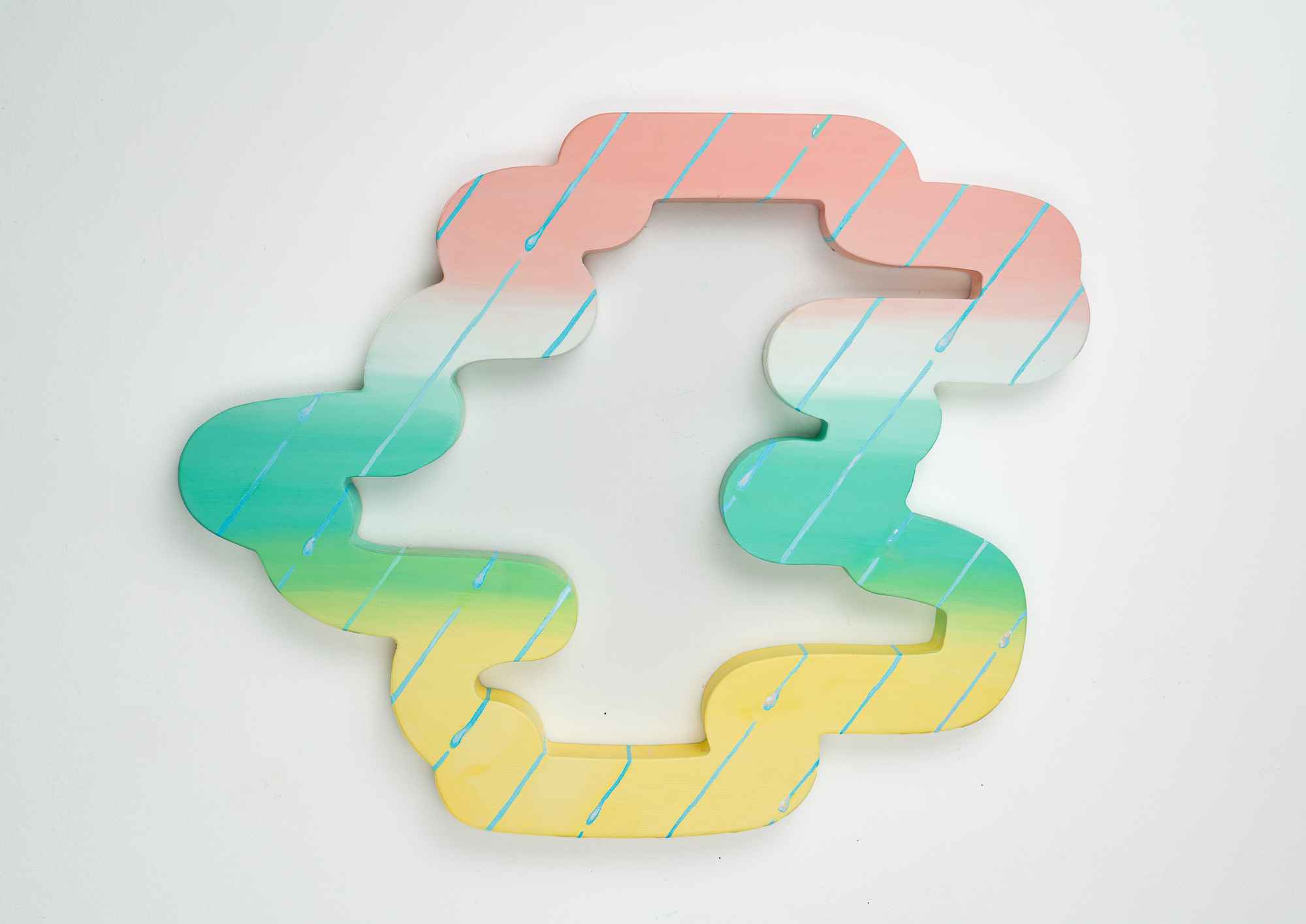
The shapes originated from shadows cast across moving water. I used these fluid forms in earlier compositions, including “As They Bathed in Color and Light,” before isolating them from the larger landscape. On their own, they began to feel like portals.
I design each shape in Procreate and have the panels CNC-cut from wood, then sand and assemble them. Moving beyond the rectangle makes the work sculptural. The wall becomes part of the composition as negative space surrounds the form and shadows extend from its edges.
In “As They Bathed in Color and Light,” reflection explores the difference between the identity we present and the self within. How did psychology inform this work and your interest in the unconscious?
I’ve been fascinated by Jungian psychology since college, particularly the persona, shadow, and individuation. My earlier work addressed masking and the identities we construct. Living in Los Angeles, I saw people arrive and try on new versions of themselves. I was also carrying secrets and working through trauma, so I became interested in the distance between what we present and what exists underneath.
In the painting, simplified, almost cartoonish objects become the persona, while their reflections suggest a more complicated interior life. My relationship to reflection has since evolved toward its ability to alter and idealize reality. Like memory or dreams, we do not reproduce reality exactly; we edit it.
“Tripping Over the Moon” turns an ordinary evening moment into something quietly magical. What interests you about finding wonder within everyday experience?
It is vital to recognize the magic in everyday life. There is so much pain in the world, and we are exposed to it constantly. Even within that chaos, we have to remain capable of witnessing beauty.
A strange reflection, the moon between buildings, or an unexpectedly beautiful sky can pull us from our screens and back into the physical world. Nothing monumental has happened, but our experience has shifted. My work asks us to recognize the extraordinary within the everyday.
How do dreams, memory, and the unconscious enter your creative process?
I’m drawn to moments when the real world does not quite look real. A reflection can invert a landscape, heat can make the horizon shimmer, or particular light can transform a familiar place. Nothing has changed, but our perception has.
Dreams take fragments of places, memories, people, and desires and rearrange them into something convincing, even without the logic of waking life. My paintings operate similarly. I begin with something observed, then simplify, distort, isolate, or idealize it. I’m less interested in illustrating dreams than recreating that state of perception, leaving enough unresolved for the viewer’s own memories and associations to enter.
Interview by Indira Cesarine for The Untitled Magazine’s DREAM Issue, available now for purchase – visit untitled-magazine.shop to order your copy.