DREAM ISSUE EXCLUSIVE: INSIDE ARTIST ARIELLE TESORIERO’S SURREAL WORLD OF BEAUTY AND DECAY
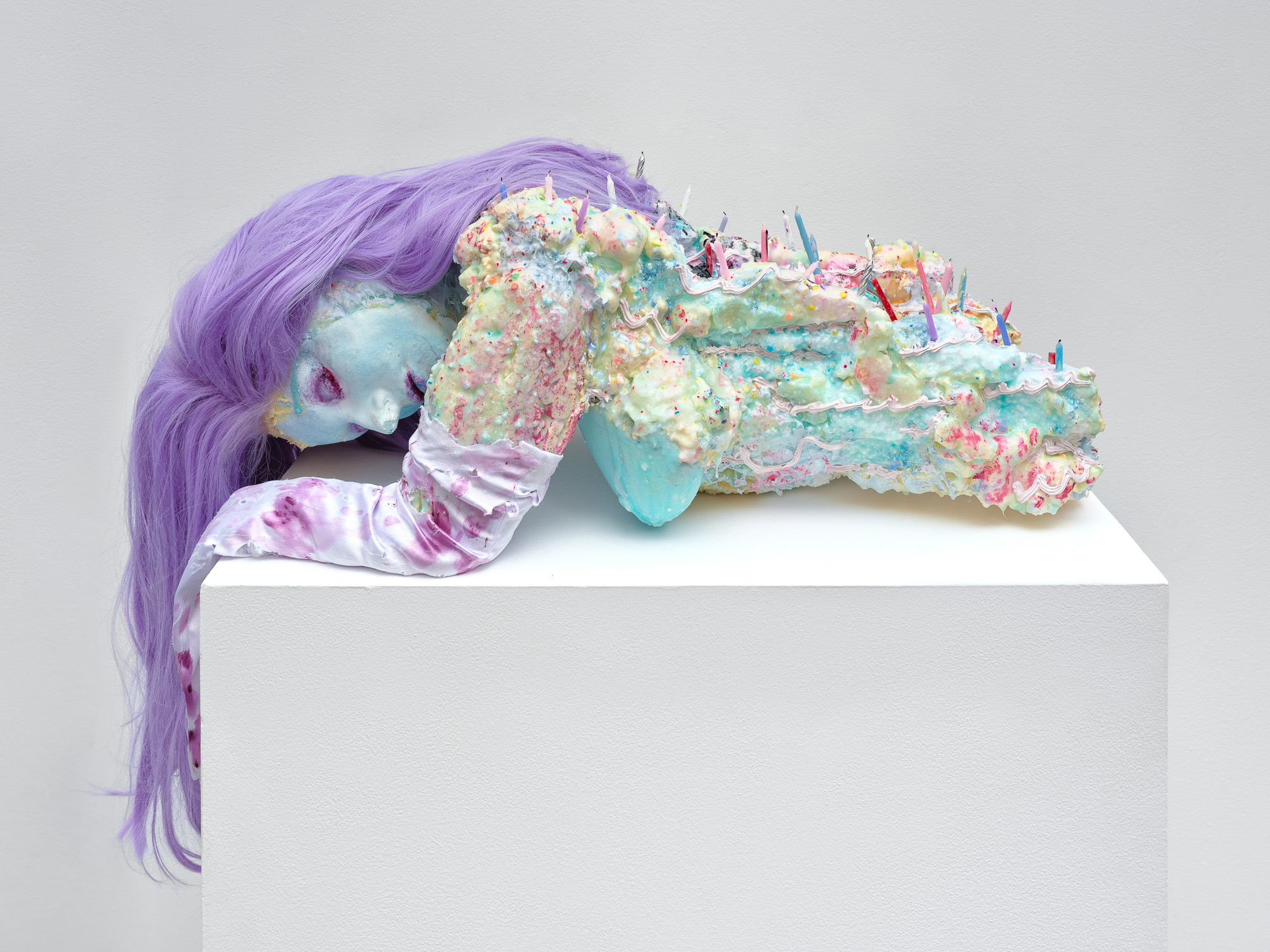
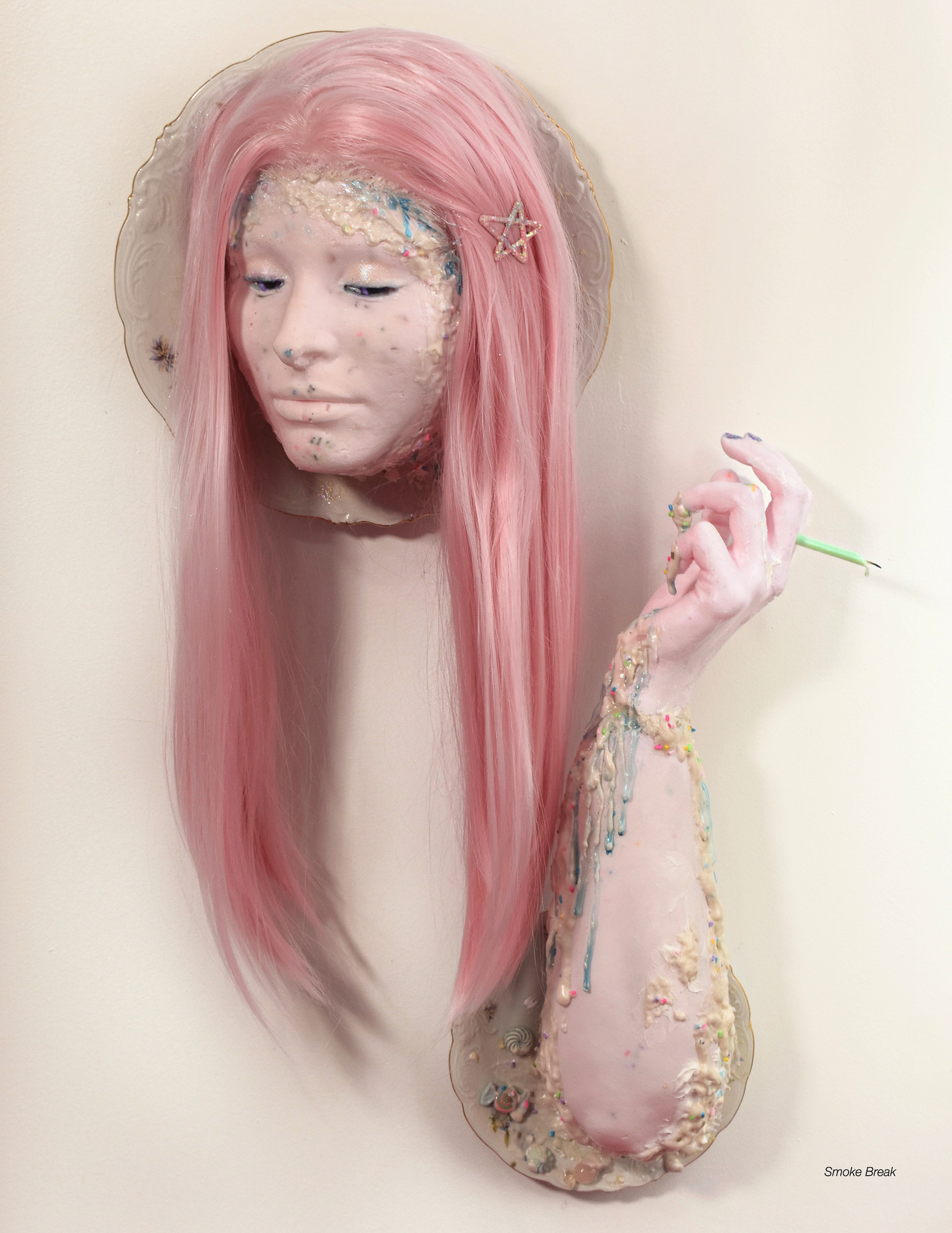
Artist Arielle Tesoriero transforms the rituals of celebration into uncanny meditations on femininity, desire, memory, and display. In her sculptures, synthetic hair spills from frosted heads, candles burn over fragmented bodies, and human features merge with layers of cake. Seductive surfaces made from silicone, wax, resin, spray foam, nail polish, and found objects draw viewers closer before revealing something unstable beneath their sweetness. The female body becomes both the guest of honor and the object being consumed.
Born in 1997 and based in New York City, Tesoriero holds an MFA from the New York Academy of Art and a BFA from Salisbury University. Her work has been exhibited with Steven Zevitas Gallery, New Art Dealers Alliance, The Painting Center, and The Untitled Space. In 2022, she completed the Kylemore Abbey Global Centre Residency in Ireland and was named a finalist for the New American Paintings Emerging Artist Grant. Her work has also appeared in New American Paintings and The Untitled Magazine.
Across “Smoke Break,” “Party Trick,” and “Teen Miss Promtasia,” celebration is never innocent or fixed. Cake carries the residue of birthdays, weddings, prom, and other milestones, preserving idealized images even as its materials suggest melting, slicing, and decay. Tesoriero’s figures inhabit the unstable distance between how a body feels from within and how it is perceived from outside. Speaking with The Untitled Magazine, she discusses mukbangs, the anxiety of the gaze, the fantasy of the prom queen, and what happens when materials reveal meanings she cannot yet name.
Your sculptures merge the feminine body with cakes, frosting, candles, and other symbols of celebration. What first drew you to food as a way of exploring identity, desire, and the consumption of women?
It all started with Trisha Paytas’s mukbangs. I was obsessed with watching her eating shows. In 2017, I began a series of paintings of my friends eating copious amounts of food. From there, my practice went through many aesthetic and material shifts, but the core of it has remained the same. Now, instead of painting my friends eating, I’m making sculptures of them as food.
Cake initially appeared in your work as a kind of trophy, proof that you had defeated or survived aspects of your childhood. When did you begin to see it as a reflection of your identity?
The shift happened alongside changes in my painting practice, which eventually led me to quit painting, for the time being anyway. I’ve been making cake sculptures since 2021, but I initially thought of them as trophies because they represented an “after” moment, rather than something constantly changing or morphing. My work has always been about the ways women internalize the gaze of others. I realized that cake doesn’t simply reflect the person I’ve been, it represents who I am. I’m a reflection of all my experiences, trying to piece myself together in a way that is both beautiful and broken.
Your materials create surfaces that feel both seductive and unsettling. How does the process of layering and transforming them shape the meaning of each work?
The meaning is constantly changing through the layers and transformations. I normally have a general idea when I begin, but I tend to start every piece differently, so I have to find new solutions. I want it to be a learning experience. The sculptures reveal their own meanings at the end.
In “Smoke Break” and “Party Trick,” candles evoke wishes and celebration, but also self-destruction. Can you tell us about this tension between fantasy, pleasure, and violence?
Cake is created to be destroyed, and I feel that way about myself. A cake only exists to be looked at, admired, and then sliced up. There’s a tension between how it feels to have a body and how a body looks to the outside world. The figures are detached from their own physical experience because they are so consumed with how they appear to others. My work uses fantasy, pleasure, and violence to explore the anxiety of the gaze.
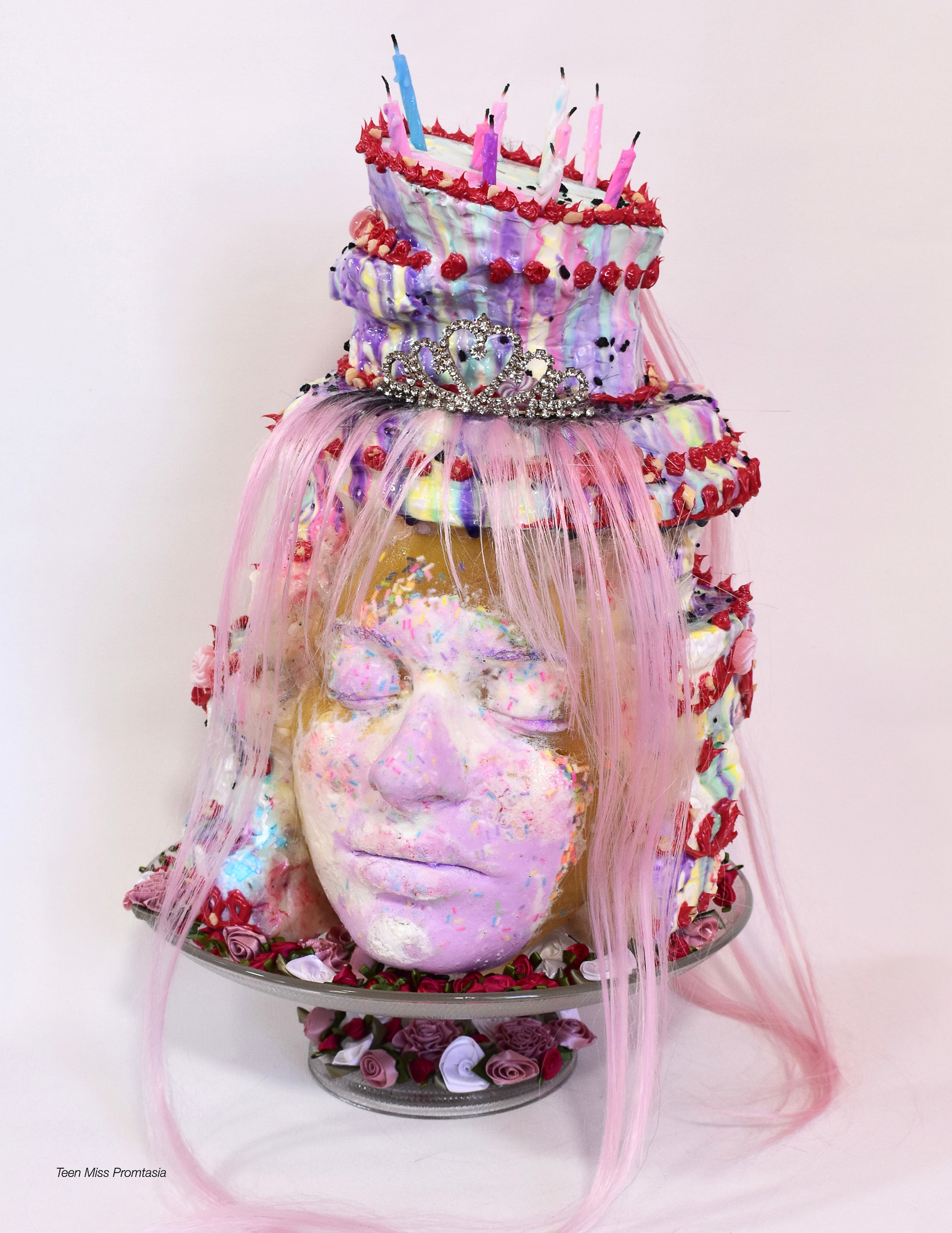
“Teen Miss Promtasia” grew from your experience of not being allowed to attend prom. How did that memory evolve into a sculpture about performance, restriction, and the fantasy of being crowned?
“Teen Miss Promtasia” is a portrait of my youngest sister as prom queen. I had the idea of making her immortal in this way because I see a lot of myself in her. This was the first piece I made where I began to think about the body as cake. Her entire head is the cake, with her hair growing out of the frosting layers and sprinkles embedded in her skin. I was thinking about creating a “pure and innocent” symbol, and I wanted to explore what it means to become an object. Think Courtney Love or Laura Palmer, women who exist between beauty and tragedy and are also depicted as prom or homecoming queens.
Beauty rituals, pageantry, birthdays, weddings, and prom carry powerful expectations for women. What interests you about these highly staged rites of passage?
I’m not necessarily interested in the events themselves as much as I am in cake. I’m more interested in how cake is connected to memory, which then becomes associated with these occasions. Most people have cake at a birthday, wedding, or other special event, so it becomes a marker for a moment in your life. We build elaborate images of ourselves around certain moments, but those images are always changing and breaking down. Cake becomes a physical way of thinking about that process.
Your figures seem suspended between dream and reality, with bodies melting into desserts and celebrations becoming strange or nightmarish. How do dreams and the subconscious allow you to explore ideas that might be harder to confront directly?
I’m interested in depicting what it feels like not to be in control of your own body, like when you are in a dream and you can’t walk or run fast enough. The dream is happening, it’s shaping you, and you can’t do anything about it. Sometimes it’s as if my subconscious comes through the materials and creates the image of something I can’t explain. I feel like I’m not good at talking about my work at all. Half the time, I don’t know why I’m making something until afterward.
What do you hope viewers experience when encountering your sculptures in person: attraction, discomfort, recognition, or something more ambiguous?
The worst thing would be for someone to look at my work and not feel anything at all. I don’t want anyone to feel something specific. I just hope they can relate to it in their own way, even if that means hating it. I think people should question why they don’t like something or why it makes them uncomfortable, because they can learn a lot about themselves that way.
Interview by Indira Cesarine for The Untitled Magazine’s DREAM Issue, available now for purchase – visit untitled-magazine.shop to order your copy.