DREAM ISSUE EXCLUSIVE: IRIS VAN HERPEN “BEYOND TIME” WITH BROOKLYN MUSEUM CURATOR MATTHEW YOKOBOSKY
Fashion is often described as fleeting, defined by seasons, trends, and the relentless pursuit of the new. Yet some designers challenge that very premise, creating work that transcends time and enters the realm of art, memory, and cultural history.
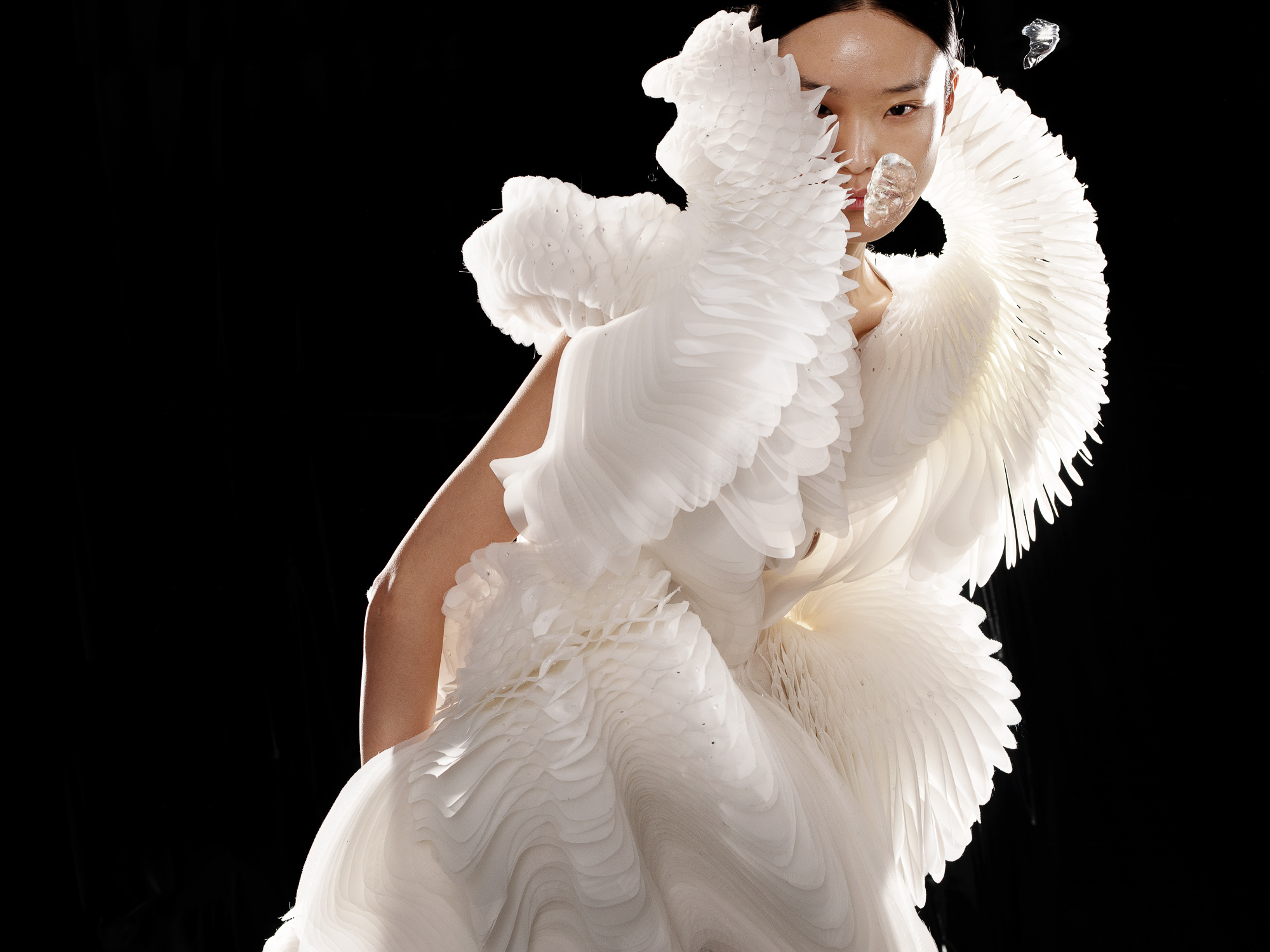
With Iris van Herpen: Sculpting the Senses at the Brooklyn Museum, fashion becomes more than a medium of dress. It unfolds as a dialogue between craftsmanship and technology, nature and innovation, the human body and the imagination. Curated by Matthew Yokobosky, Senior Curator of Fashion and Material Culture at the Brooklyn Museum, the exhibition invites visitors to reconsider not only what fashion is, but what it can preserve, communicate, and inspire across generations.
Ayse Sarioglu interviewed Yokobosky for The Untitled Magazine about fashion’s relationship to time, the cultural life of garments, and why the most enduring designs are those that continue to shape our collective imagination long after they leave the runway.
Does fashion follow time, or does it create it?
Some fashion responds to its moment; the greatest fashion reshapes how we understand time itself. It embodies an idea that remains intellectually relevant long after trends have disappeared.
Fashion is often shaped by the rhythm of the present moment, yet this exhibition seems to occupy a different dimension of time, where garments are created not only for a season, but for memory. Do you believe fashion’s future lies in constant renewal or in creating ideas that endure?
Fashion is often described as ephemeral, yet museums exist because certain garments refuse to become obsolete. They continue to ask questions, provoke debate, and inspire wonder long after they were made. Those are the garments that become part of history.
Museums can remind us that time is the ultimate curator. Every generation produces thousands of collections and designs, yet only a remarkable few continue to speak across decades, across centuries. They become part of our cultural memory. We may never see Cleopatra’s wardrobe or Louis XIV’s complete court dress, yet their silhouettes continue to define how we imagine their worlds.
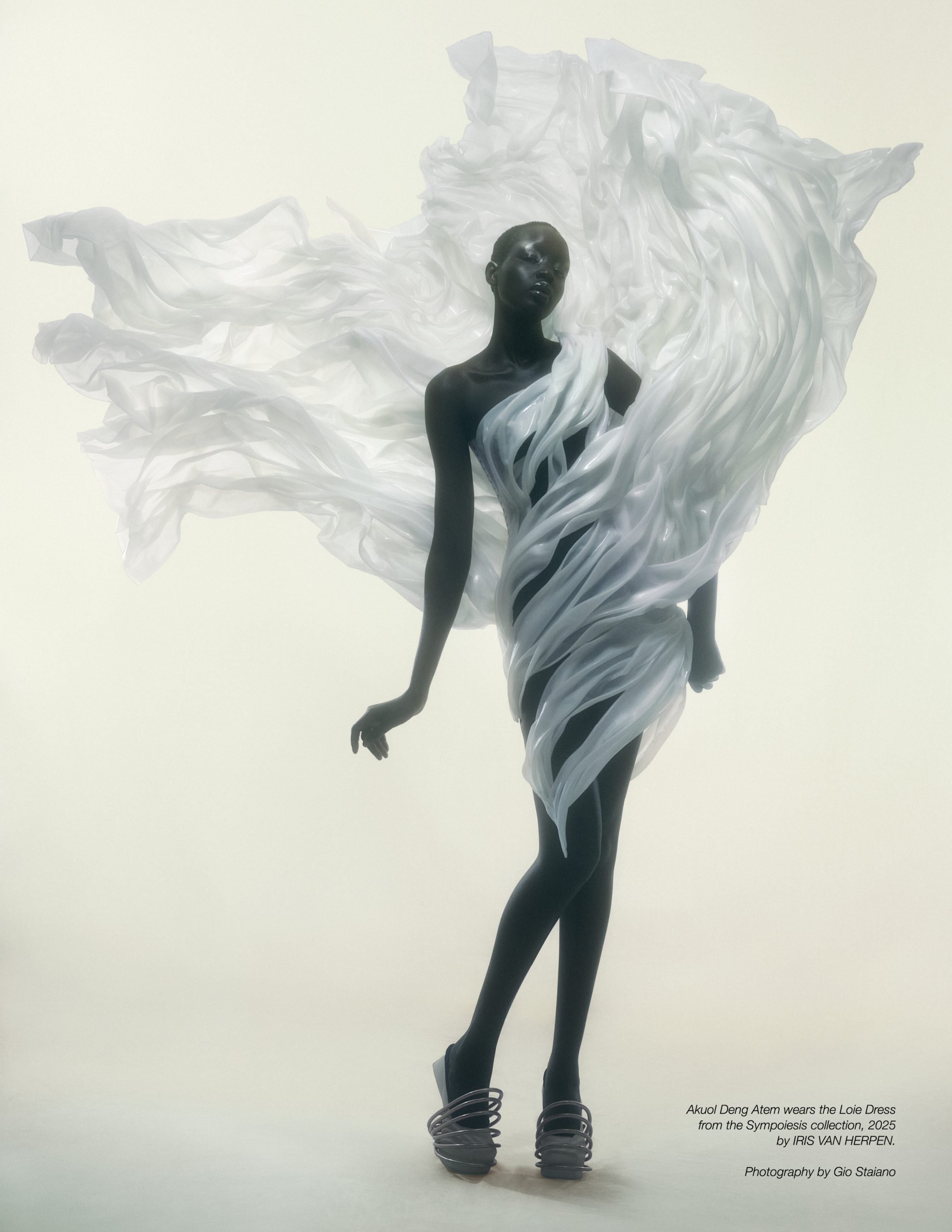
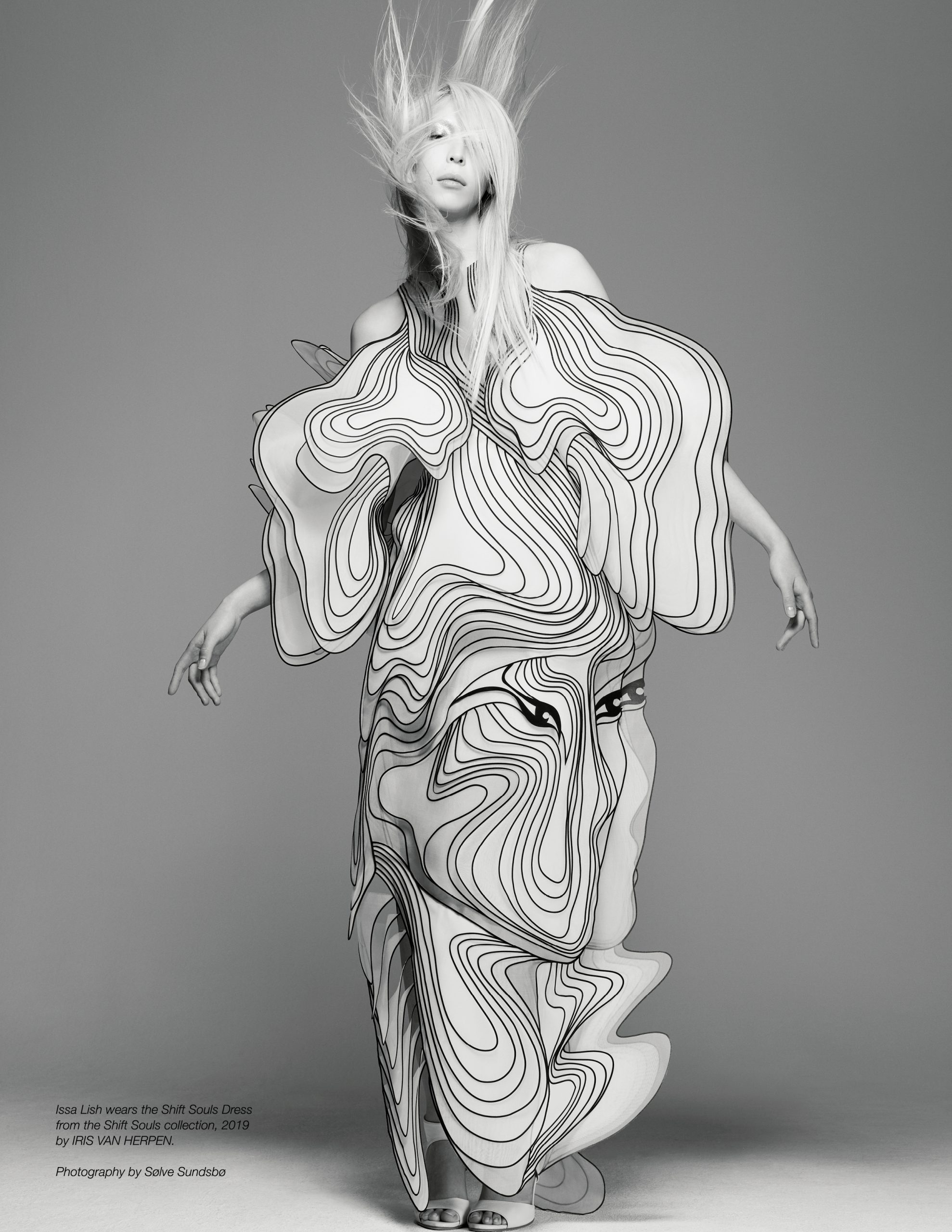
Iris van Herpen’s work occupies this extraordinary space between archaeology and speculation. It feels simultaneously ancient and futuristic, drawing upon natural systems that have evolved over millennia while employing technologies that imagine entirely new possibilities. Her couture exists outside the conventional fashion calendar, inviting us to see fashion not as seasonal luxury, but as an enduring form of intellectual and artistic inquiry.
When does a garment cease to be a product and become a cultural object? Is its lasting significance determined by technical mastery, innovation, emotional resonance, or its ability to generate new meaning across generations?
I don’t believe there is a single moment when a garment becomes a cultural object. It happens gradually, when people return to it, not simply because it is beautiful, but because it continues to generate new meanings.
Technical mastery matters. Innovation matters. Emotional resonance matters. Yet enduring significance emerges when a design transcends its original function and begins to express something larger than itself: a transformation in technology or a profound shift in cultural values.
This is ultimately why museums collect and display fashion. We are not preserving luxury; we are preserving ideas made tangible. Every significant fashion design tells us something about the imagination of its designer, the aspirations of its culture, and the future it dared to envision.
Where does the true life of a garment begin? Is its value measured by how many people wear it or by how many generations it inspires and the place it ultimately occupies in our cultural memory?
Influence ultimately outlives popularity.
Many fashion designs enjoy extraordinary commercial success, only to disappear from cultural memory within a few years. Others may have been worn only once, yet they continue to shape the visual language of fashion for generations. Adrian’s sharp-shouldered jackets for Joan Crawford, Yves Saint Laurent’s “Mondrian dress,” and Björk’s swan dress each transformed the way we think about clothing and identity.
The true life of a fashion design begins when it enters the cultural imagination. From that moment, its influence extends beyond the body of its original wearer. It lives through museum collections, exhibitions, scholarship, photography, cinema, and perhaps most importantly, through the work of future designers.
The most enduring garments are never simply remembered. They become reference points through which successive generations reinterpret the past and imagine the future.
Every era leaves behind objects that come to define it. What ideas, values, or creations from today’s fashion do you believe will remain meaningful and come to represent our time?
I believe our era will be remembered for dissolving boundaries between craftsmanship and technology, biology and engineering, the handmade and the computational, fashion and science.
We are witnessing an extraordinary moment in which designers collaborate with architects, physicists, biologists, engineers, and material scientists. At the same time, paradoxically, this technological revolution has also renewed our appreciation for handwork, patience, and the extraordinary intelligence of traditional craftsmanship. This is evident in “The Alchemical Atelier” section of Iris van Herpen: Sculpting the Senses at the Brooklyn Museum.
I hope the lasting legacy will not simply be new materials or new technologies. Rather, it will be the recognition that fashion can serve as a profound intellectual and cultural medium, one capable of expressing ideas about sustainability, identity, ecology, and humanity’s evolving relationship with the natural world.
Iris van Herpen’s work exemplifies this possibility beautifully. Her looks demonstrate that innovation achieves its greatest power not when it abandons craftsmanship, but when it deepens it. Her sculptural designs remind us that the future of fashion will be defined not by technology alone, but by the imagination, curiosity, and humanity that give technology meaning.
As our conversation came to a close, one idea remained clear: the future of fashion will not be measured solely by innovation or technological advancement, but by its ability to create lasting cultural meaning. Through Iris van Herpen: Sculpting the Senses, fashion emerges not as a fleeting expression of style, but as a living archive of imagination, one that continues to evolve with every generation that encounters it.
– Interview by Ayse Sarioglu for The Untitled Magazine’s DREAM Issue