DREAM ISSUE EXCLUSIVE: REISHA PERLMUTTER ON WATER, MEMORY, AND THE SUBCONSCIOUS
“What happens if I make one of these paintings, not for anybody else, but for myself?”
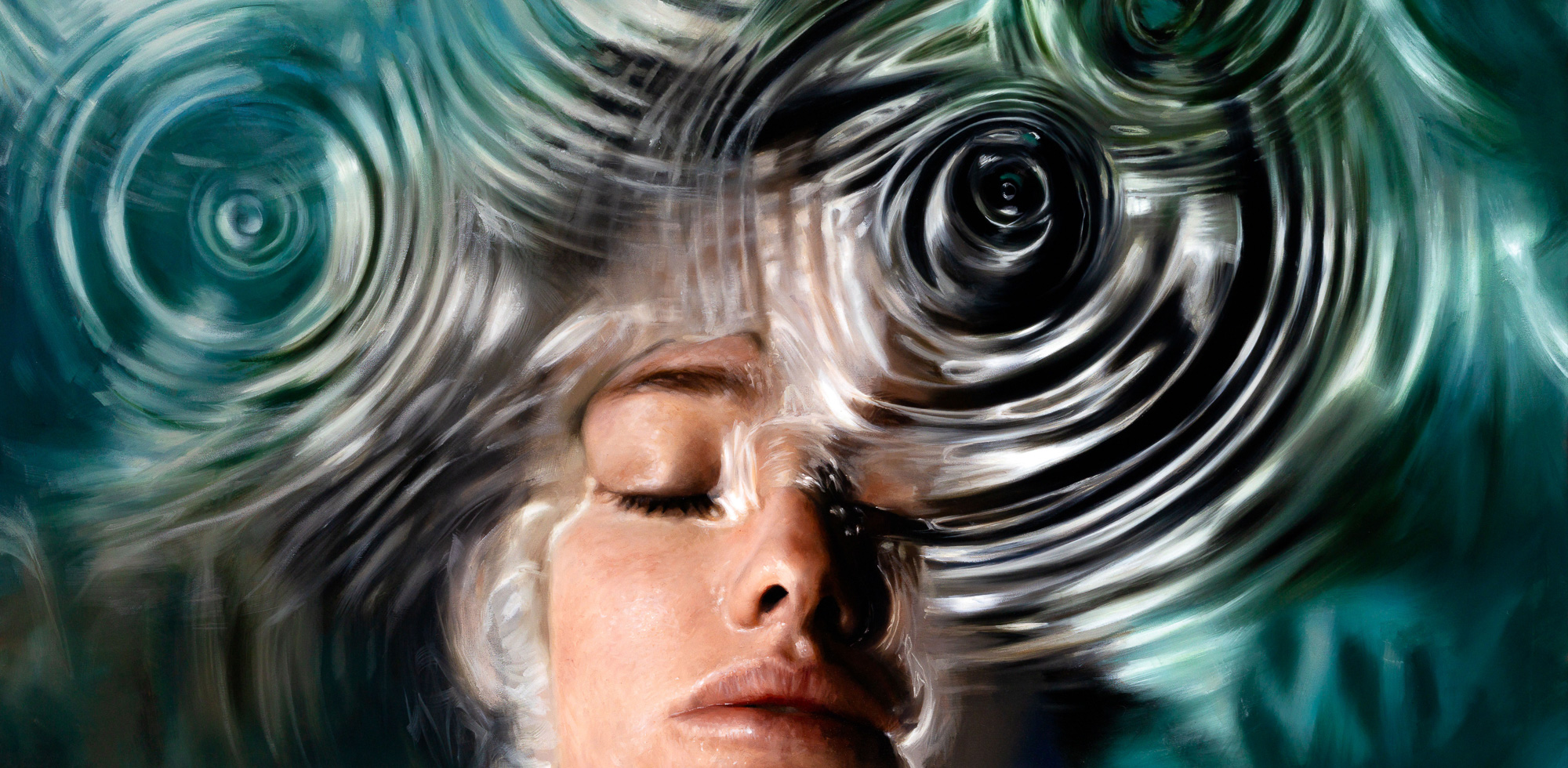
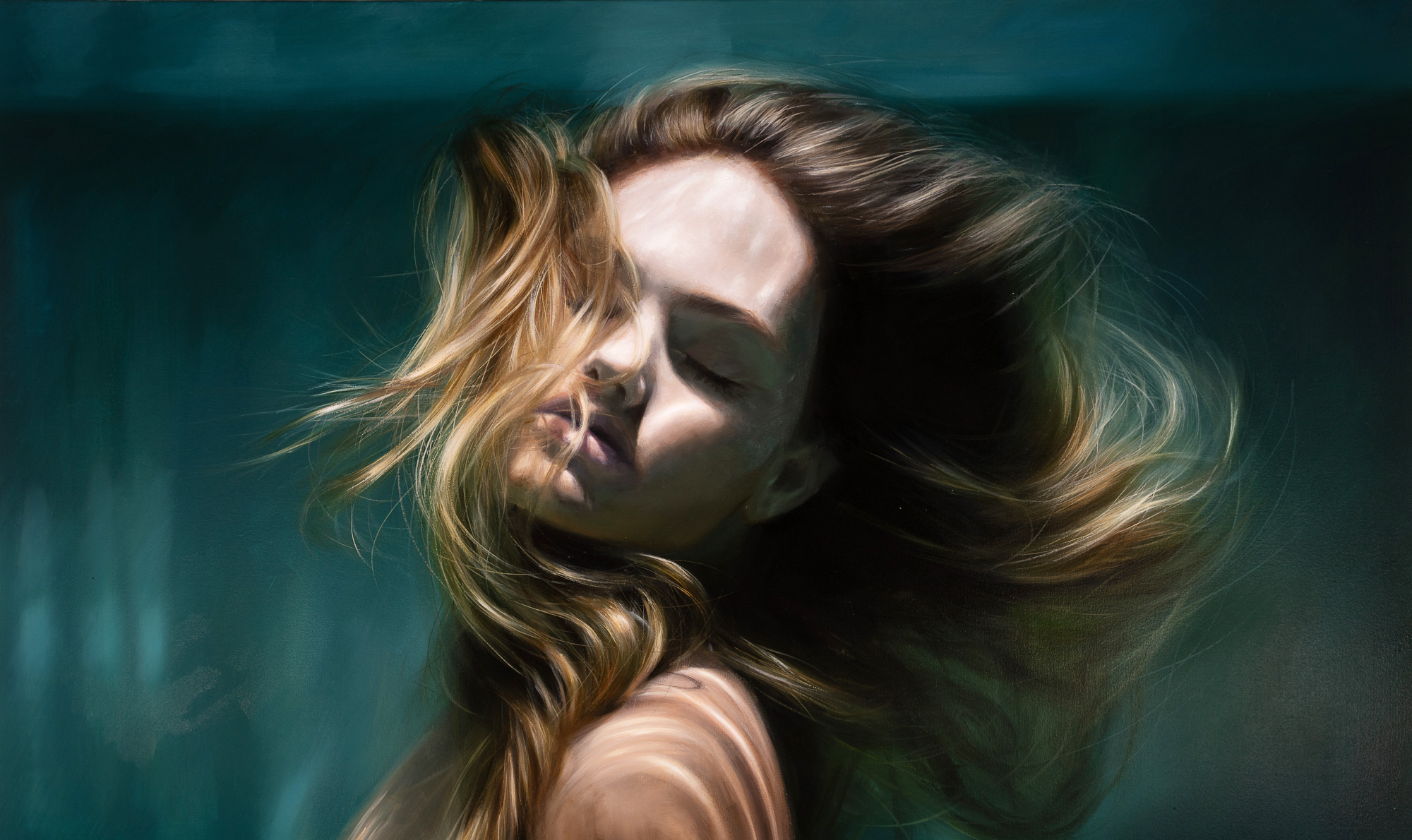
For Reisha Perlmutter, that question marked a decisive turn. The contemporary American painter, freediver, and underwater photographer is known for luminous, large-scale images of figures immersed in water, their bodies suspended beneath shifting surfaces and refracted light. Rooted in technical precision yet resistant to the fixity of traditional portraiture, her paintings explore the meeting point of body, environment, perception, and memory. Skin, water, and landscape merge; faces fragment and re-emerge; individuality gives way to something more fluid and elemental.
Born in Naples, Florida, in 1990, Perlmutter earned her BFA from the School of the Art Institute of Chicago in 2012 and her MFA from the New York Academy of Art in 2015. Her work has been exhibited nationally and internationally, including at the Naples Art Institute, Marin Museum of Contemporary Art, and Sotheby’s New York. One of her paintings was selected as the cover image for Kerry Washington’s memoir, Thicker Than Water. Currently living and working between Miami and Los Angeles, she draws on her own practice as a freediver and photographer to create paintings that approach the body as both vessel and mirror, a site where femininity, survival, ecological reverence, and transcendence converge.
Over the past decade, Perlmutter has developed this language across exhibitions whose titles trace the conceptual arc of her work. “Origin,” presented in Naples in 2016, was followed by “Immerse” in East Hampton in 2017, “Undercurrents” in Fort Worth in 2018, “Incandescence” in New York in 2023, and “As Above, So Below” in New York in 2024. Her practice also extends beyond underwater portraiture into cross-cultural documentation, connecting personal experience with broader narratives of survival and ancestral continuity. Yet water remains its generative center: a physical environment she enters with her own body, a source of optical transformation, and a metaphor for impermanence. The paintings are intimate in their attention to skin, breath, and expression, but expansive in the questions they raise about the relationship between individual consciousness and the natural world. That balance between precision and dissolution gives her images their distinctive emotional charge. It situates femininity within a wider ecology of interdependence and renewal.
In a conversation for The Untitled Magazine’s DREAM Issue, artist Indira Cesarine, founder of The Untitled Magazine and The Untitled Space, spoke with Perlmutter about the origins of her underwater imagery, the tension between control and surrender, the complicated realities of social media, and the internal states that continue to shape her work. Their connection extends back more than a decade, to Perlmutter’s years at the New York Academy of Art and the earliest stages of her career. Cesarine remembers encountering a visual language that already felt remarkably resolved. “Your work had such a singular narrative,” she told her. “You were creating these beautiful, photorealistic yet dreamlike underwater paintings from the beginning.”
The direction emerged during a period of uncertainty. While studying at the Academy, Perlmutter felt the pressure to distinguish herself and find an original voice within an intensely competitive environment. Then an injury forced her to return to Florida for shoulder surgery. Unable to paint, she began spending time in the water, returning to a ritual she had developed as a child. “Whenever I felt stressed or wanted to get away from everything, I would sink to the bottom of the pool, hold my breath for as long as I could, look up, and let the silence take over me,” she recalled.
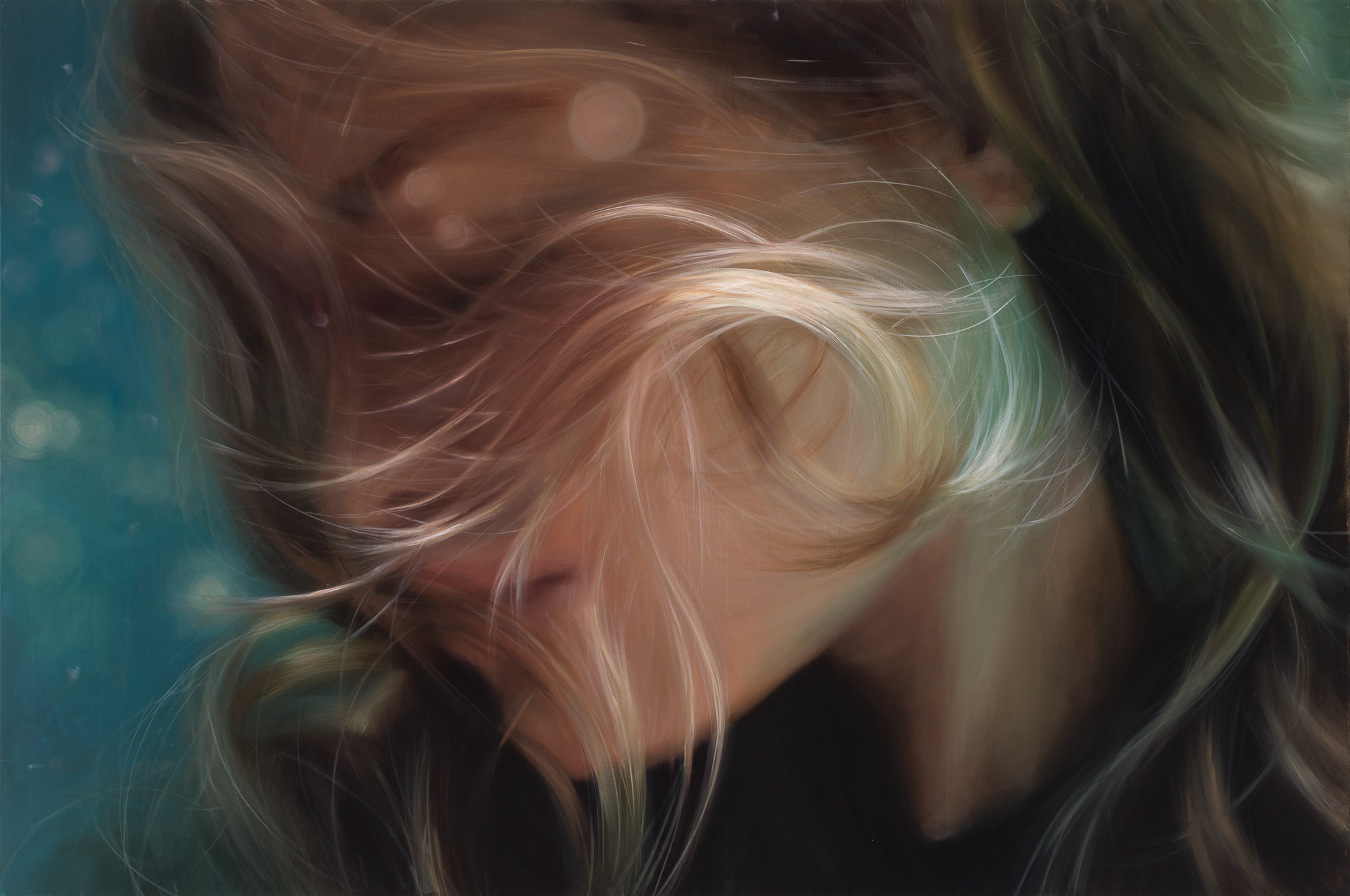
During her recovery, she had a dream and began questioning the need to make work for anyone else. “Instead of looking for external validation from graduate school, the art market, or whatever else, what if I made a painting about myself, my current situation, and where I was at that moment?” The resulting image launched the practice for which she would become known. It also established a principle that has remained central to her development: “There is so much pressure on artists to keep up with what’s happening in the market and the art world and to ask what we are making that is unique. Instead, it became about going inward and asking ourselves, ‘What is the truth in our work?’”
That inward movement was also a return to place. Growing up near the Gulf in Naples, Perlmutter spent much of her childhood outdoors. Her father was an accomplished freediver who would go spearfishing, and the family was frequently on the boat or surrounded by nature. Those experiences preceded the constant mediation of screens and social platforms. “I grew up before the internet, cell phones, and all of these distractions,” she said. “The beauty of my childhood was that we could simply go outside without any preconceived ideas and experience nature as it was.”
With time, she has come to recognize those formative encounters as the foundation of her visual language. “When we’re young adults, we often try to distance ourselves from the formative years of our childhood. We say, ‘I’m not a result of that.’ As I’ve gotten older, I’ve realized how incredibly powerful those simple experiences were.” Living in New York initially took her away from that elemental rhythm, while her later life in California enabled a deeper return to it. What began as an intuitive desire to paint herself underwater has expanded into a multidisciplinary process involving freediving, underwater photography, performance, and painting.
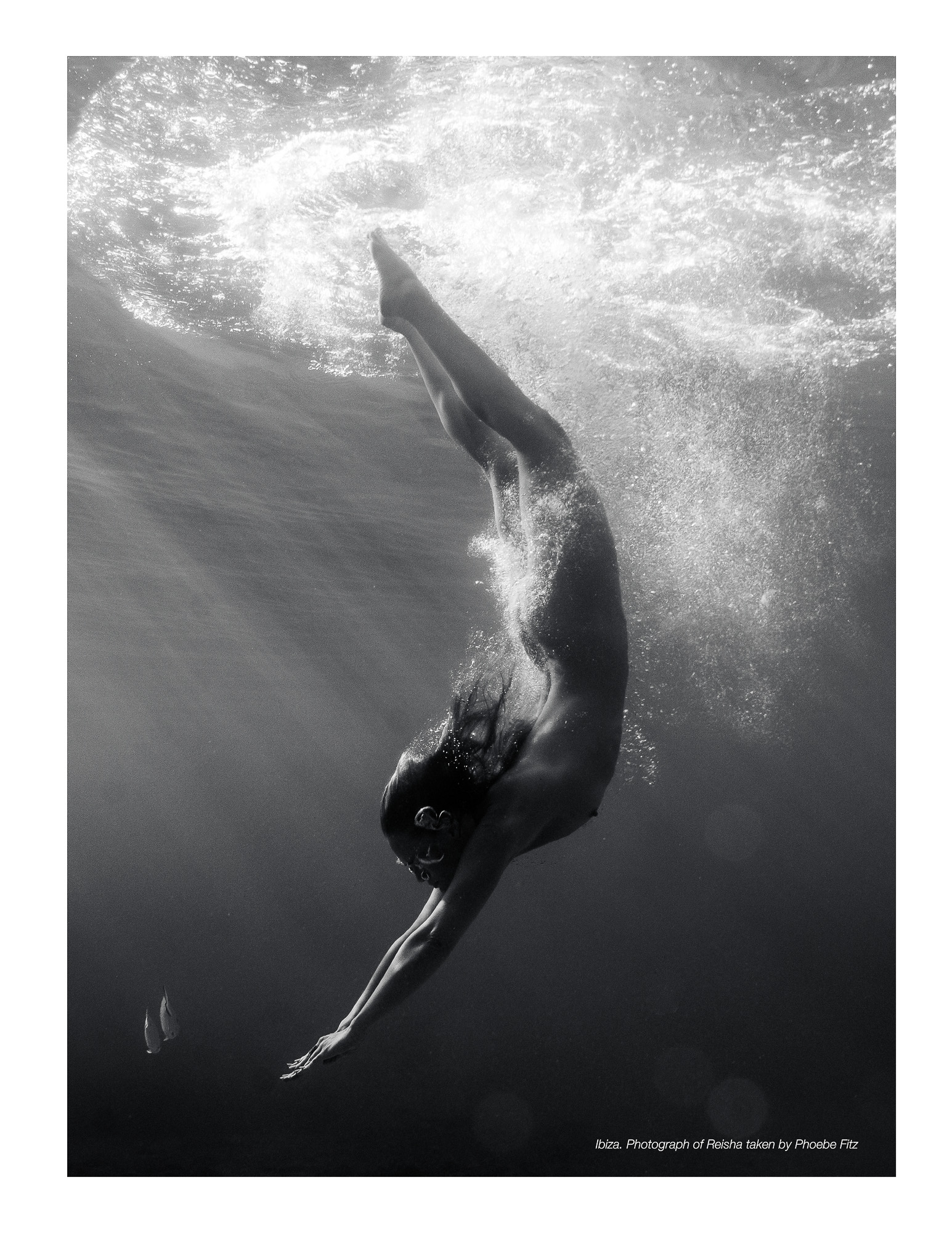
Perlmutter shoots the reference images for her paintings herself. The process is distinct from the self-portraits she creates in collaboration with other photographers, often in water, deserts, mountains, and other dramatic landscapes. In those collaborations, surrender begins before the painting exists. “They examine control and surrender and what happens when somebody else captures me without my controlling the shutter,” she explained. “They are able to see me. I think they are also meditations on what it means to truly let go.”
She experiences these sessions almost as performances. By relinquishing control of the camera, she can inhabit the image rather than construct it from behind the lens. “I get to live, breathe, and embody what it means to be the art.” When photographing another person underwater, the equation reverses but remains unpredictable. She may control the shutter, yet she is still responsive to the subject’s body, breath, and movement. “I’m at the mercy of the subject, and I get to observe the beauty of how that person moves underwater. I capture those images myself, and those are the photographs I use for my paintings.”
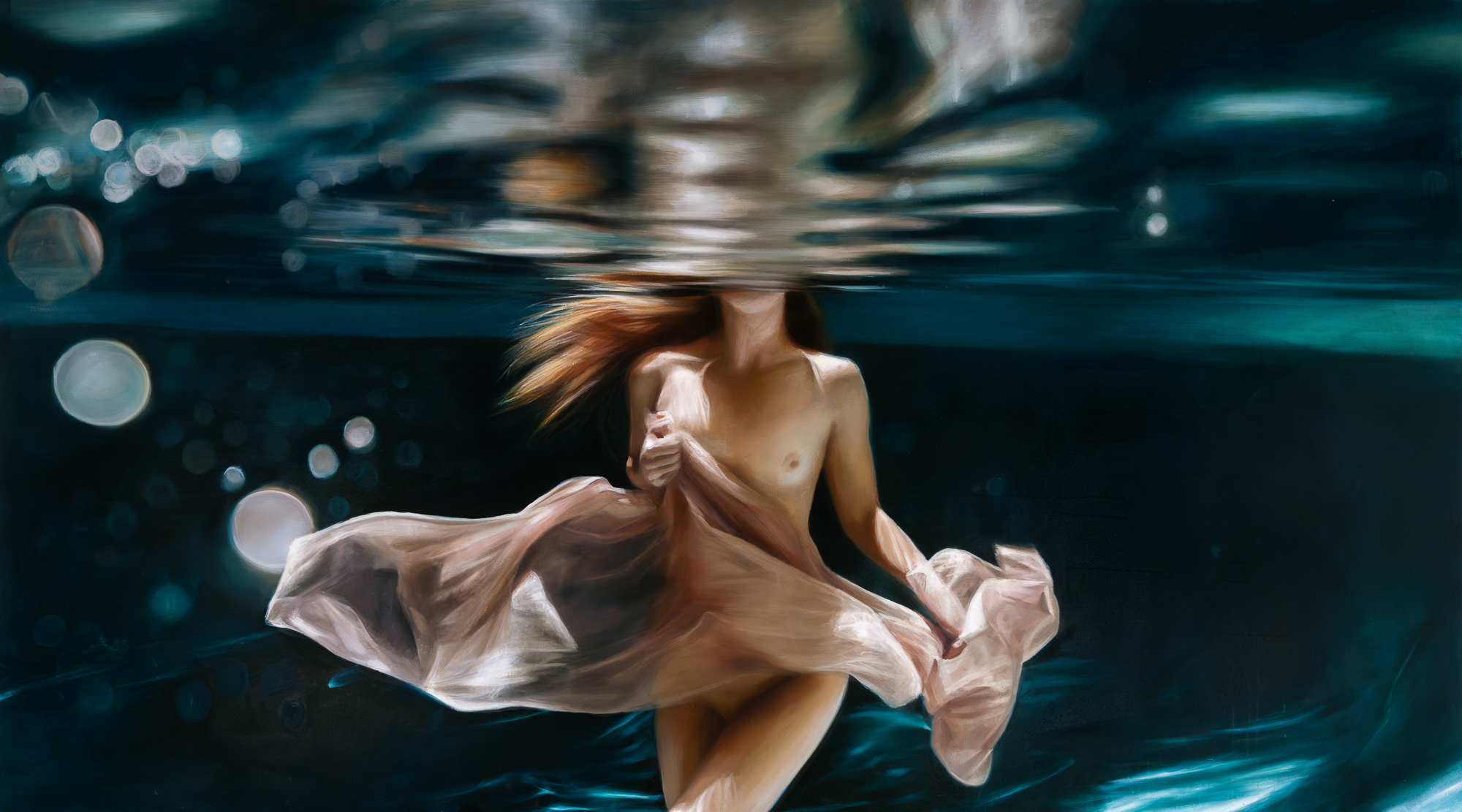
Recently, Perlmutter has begun exhibiting her photography as an independent part of her practice. The shift feels both exciting and precarious. “It’s scary. It definitely feels like a threshold moment,” she admitted. Her hesitation partly reflects an educational culture in which painters were discouraged from acknowledging their use of photographic references. At the Academy, she remembers a prevailing taboo around the practice. Even after graduating, people advised her to hide the source images she posted online because viewers might discover that she worked from photographs.
Perlmutter resisted the implied hierarchy. The photographs were never borrowed images or passive documents. She conceived and composed them, entered the water carrying specialized equipment, held her breath, directed or embodied the subject, and worked within conditions that could never be recreated through conventional painting from life. “The photograph is as much a piece of art as anything else,” she said. “It isn’t simply a matter of clicking a button. I’m going underwater with all of this gear and holding my breath. That is as much an art and a practice as painting.” Embracing photography publicly has allowed her to ask, “How much further can I push this?”
Photography also complicates her inquiry into reality. Every act of perception is colored by individual experience, and Perlmutter readily acknowledges how growing up in Florida shaped the way she sees. Yet the camera offers a different kind of evidence, grasping at a physical reality before it is translated through paint. She is drawn to the idea that an image of a submerged body can make an extreme-seeming experience tangible. “It doesn’t have to be a faraway, imaginary place,” she said of the peace accessed underwater. “It is a real place within ourselves that we can access.”
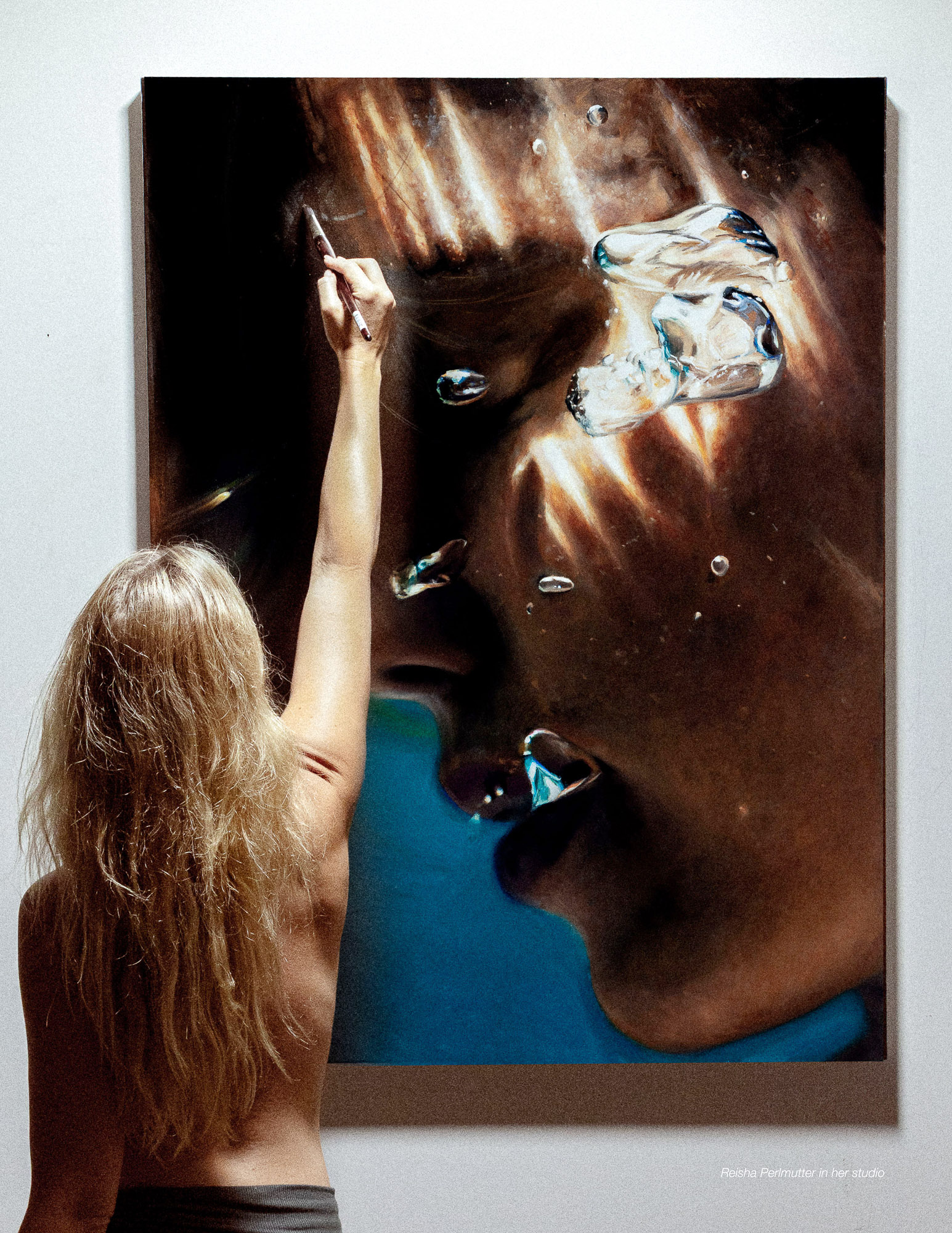
This search for unguarded presence runs through both her work and her public persona. Perlmutter has built a significant social media following through videos and images of herself painting in the studio, often barefoot and dressed for the beach or gym. The ease of these posts can look highly calculated from the outside, but she describes them as a straightforward reflection of daily life. “People ask me, ‘Are you really like that all the time?’ My friends here know that I never wear shoes. I’m at the beach every day when I’m not working.”
The decision to foreground herself was also a response to censorship. Her account was repeatedly shadow banned because her paintings depict nude women, even though the content consists of artworks. Eventually she decided, “If they’re going to shadow ban everything I post, I’m just going to post myself making work in my studio.” She sets her phone on a small tripod and records in whatever she happens to be wearing. “The more I let go of what I’m supposedly meant to create for social media and allow it to reflect who I am, the more fun I have with it.”
Life in California reinforced that freedom. Living across from the beach in a light-filled studio, Perlmutter begins many days with primal movement practices that strengthen her relationship with her body. She then enters the ocean, returns home, and paints. “How much can I push my breath? How much can I push myself to connect with who I am?” she asks. “My whole world here influences my art in some way.” The routine is simple by design. “The older I get, the more I feel I’m returning to my inner child,” she said. “I want to wear as little as possible, climb trees, be barefoot, feel free, and find beauty in not having boundaries around me.”
Freedom, however, does not mean immunity from the pressures of visibility. From the outside, Perlmutter’s trajectory appears enviable: a distinctive body of work developed at a young age, a steady exhibition history, institutional recognition, and an online presence that makes artistic life appear effortless. Cesarine asked how that image compares with her lived experience. Perlmutter had been considering precisely that question. “One of the potential pitfalls of social media, and of being involved in the art market, is the amount of weight placed on external validation,” she said. “I think that can be really crippling for an artist, and I have definitely experienced that myself.”
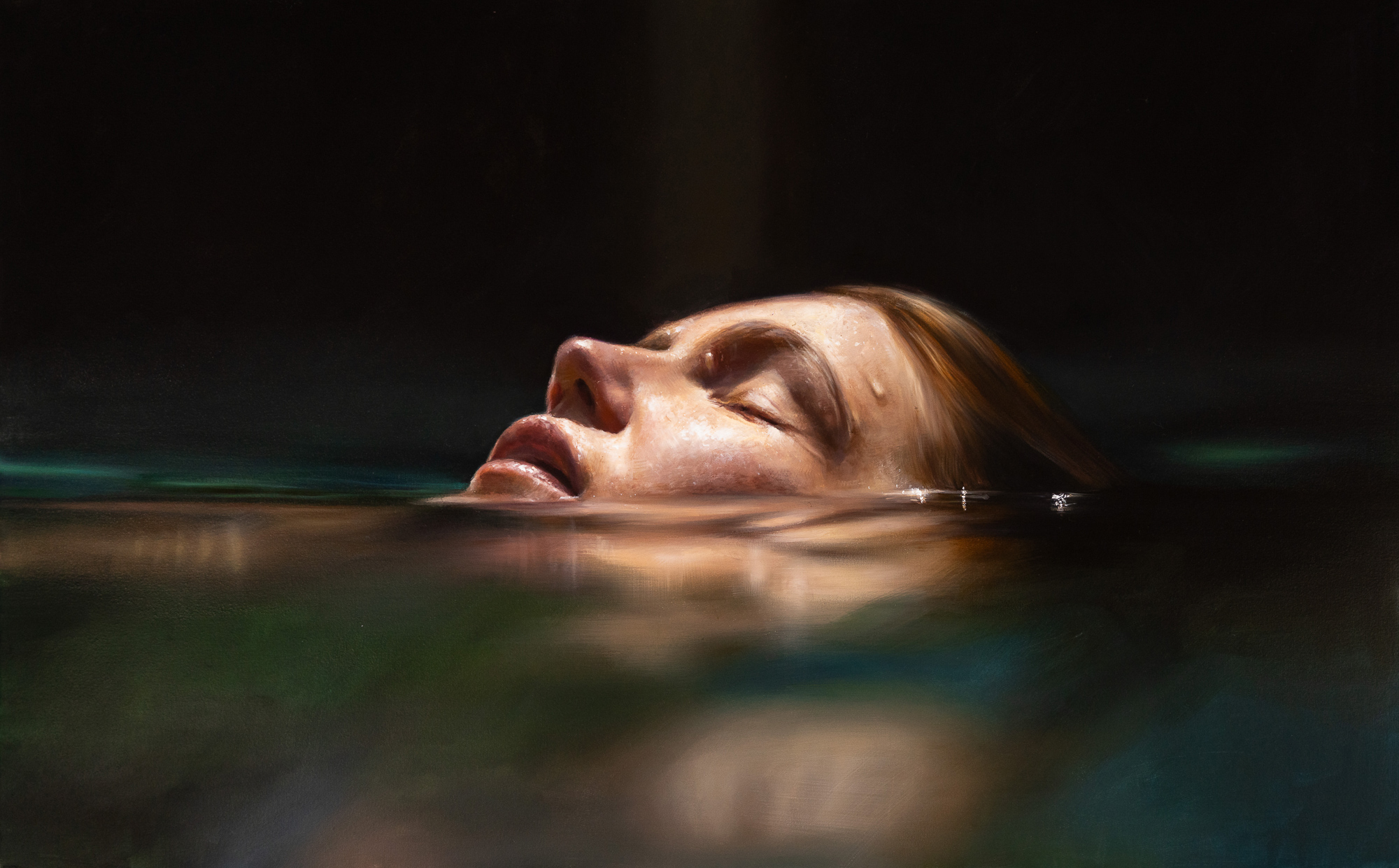
Early in her career, exhibitions and recognition understandably felt urgent. She remains grateful for those opportunities and hopes to continue showing throughout her life, but her measure of success has shifted. “The true path for an artist, at least for me, isn’t about external validation. It’s about doing the harder thing, which is going inward and asking, ‘What is the true art?’” Whether a post performs well, a review is positive, or an exhibition is celebrated matters less than the private test she now applies: “Is the work something I’m proud of?”
That question brings her back to the central tension in her practice. “I think it’s the tension we all experience between control and surrender,” she said. Contemporary culture encourages people to emphasize what makes them distinct, exceptional, or more desirable than someone else. Underwater, those distinctions fall away. Clothing disappears, breath becomes finite, and the body relies on ancient instincts. “There is a phenomenon that happens in the water where we literally return to birth and to the most basic elements of existence,” she explained. “Stripping away our clothes and holding our breath connects us to the most fundamental aspects of what makes us human. There is survival, but there is also beauty in how our bodies move and keep us alive without having to pose.”
Her explorations of surrender now extend beyond the ocean. A recent photographic project in Joshua Tree placed the body against a landscape that is physically unforgiving in a different way. The rocks are gritty and hard, the days intensely hot, and the nights cold. “Every landscape has its own ability to invite us into a state of surrender,” she observed. Removing the equipment and protective layers associated with navigating these environments introduces discomfort, and she is interested in the psychological opening that follows. “That moment of discomfort is where we’re able to see the truth in our work, ourselves, and our psyches.”
These ideas converged in “Watermark,” Perlmutter’s 2026 solo exhibition at Slattery Gallery in Southampton. Her first solo presentation with the gallery and her return to the Hamptons after a 2017 East Hampton exhibition, the show brought together paintings in which bodies dissolve into rippling currents, refracted light, and fractured reflections. The title refers to both water’s visible traces and the emotional and psychological imprints carried in the body over time. Works including “Threshold,” “Surrender,” “Falling Into Grace,” “The Crossing,” and “From Within” echo the vocabulary of transition and interiority that runs through her conversation.
For Perlmutter, “Watermark” was less a declaration of reinvention than an opportunity to recognize continuity. “It’s a moment of reflection and gratitude for the support I’ve received, whether people have bought my work, sent me messages, or reached out in other ways,” she said. “The essence of my work is actually the same, but my process has expanded in a way that is really beautiful for me to see.” The exhibition became a full-circle acknowledgment of a decade’s passage and of the community that accompanied it.
The apparent immediacy of Perlmutter’s images belies the labor involved in creating them. Social media can condense months of work into seconds, making a painting appear to materialize between one post and the next. For Perlmutter, filming in the studio can feel intrusive because painting has long functioned as a private meditation. “There is sometimes a disservice to artists and to people who see the work when it looks so immediate and it looks so beautiful and effortless,” she said. “I think that’s not really the truth.”
Before a painting begins, she assembles her fins, underwater housing, camera equipment, and other gear; finds subjects; organizes the shoot; and enters the water. She may then spend hundreds of hours reviewing photographs, selecting a reference, and combining elements from multiple images before touching the canvas. The painting itself can take months. She is wary of studio content that reduces this process to a quick reveal, particularly because aspiring artists may compare their own pace and uncertainty with a polished illusion. “It’s important for artists to talk about the truth behind what we share,” she said. Otherwise, someone may conclude, “I’m not good enough because I can’t make a painting in three days.”
Cesarine remembers visiting Perlmutter’s Brooklyn studio years earlier, when her bedroom, kitchen, living space, and workplace occupied a single open loft. A giant easel stood against her bedroom wall. Rather than conceal the arrangement, Perlmutter welcomed visitors into it. “That was a crazy apartment,” she recalled. “I guess people are just going to come into my home, studio, kitchen, and bedroom. It’s all one space.” She remained there for approximately eight years. To Cesarine, the openness of that early studio visit reflected an authenticity that remains visible in the paintings’ sensitive treatment of the body.
The submerged figures often close their eyes. They appear pensive, exposed, and intensely present, held in an environment where ordinary distractions and noise have vanished. This quality made Perlmutter’s work a natural fit for the DREAM Issue and its exploration of altered states, memory, and the subconscious. “We can see so much on the outside, but the question is, what is happening internally?” Perlmutter said. “The paintings inherently pose that question. We see a figure in an environment, but we know something is happening inside that person.”
During the months preceding the interview, she had become increasingly interested in dreams and in the ideas of Carl Jung, whose archetypes were also the subject of her graduate thesis. She considers how these recurring forms emerge from the subconscious, appear in dreams, and influence the ways people see and express the world. “I think it’s important to make these things conscious so that we’re aware of what we’re painting,” she said.
Across Perlmutter’s practice, water is more than subject or setting. It is a method of removing the structures that organize ordinary life, a connective force through which identity becomes permeable and the body returns to instinct. The camera records that encounter; paint reconstitutes it through light, color, and time. What appears to be a portrait becomes a sensory and psychological threshold, asking the viewer to pause at the boundary between surface and depth, control and release, image and embodied experience.
“Part of what I want from my work is for the viewer to ask that same question of themselves,” Perlmutter reflected. “What is happening inside of you during these moments when you surrender?”
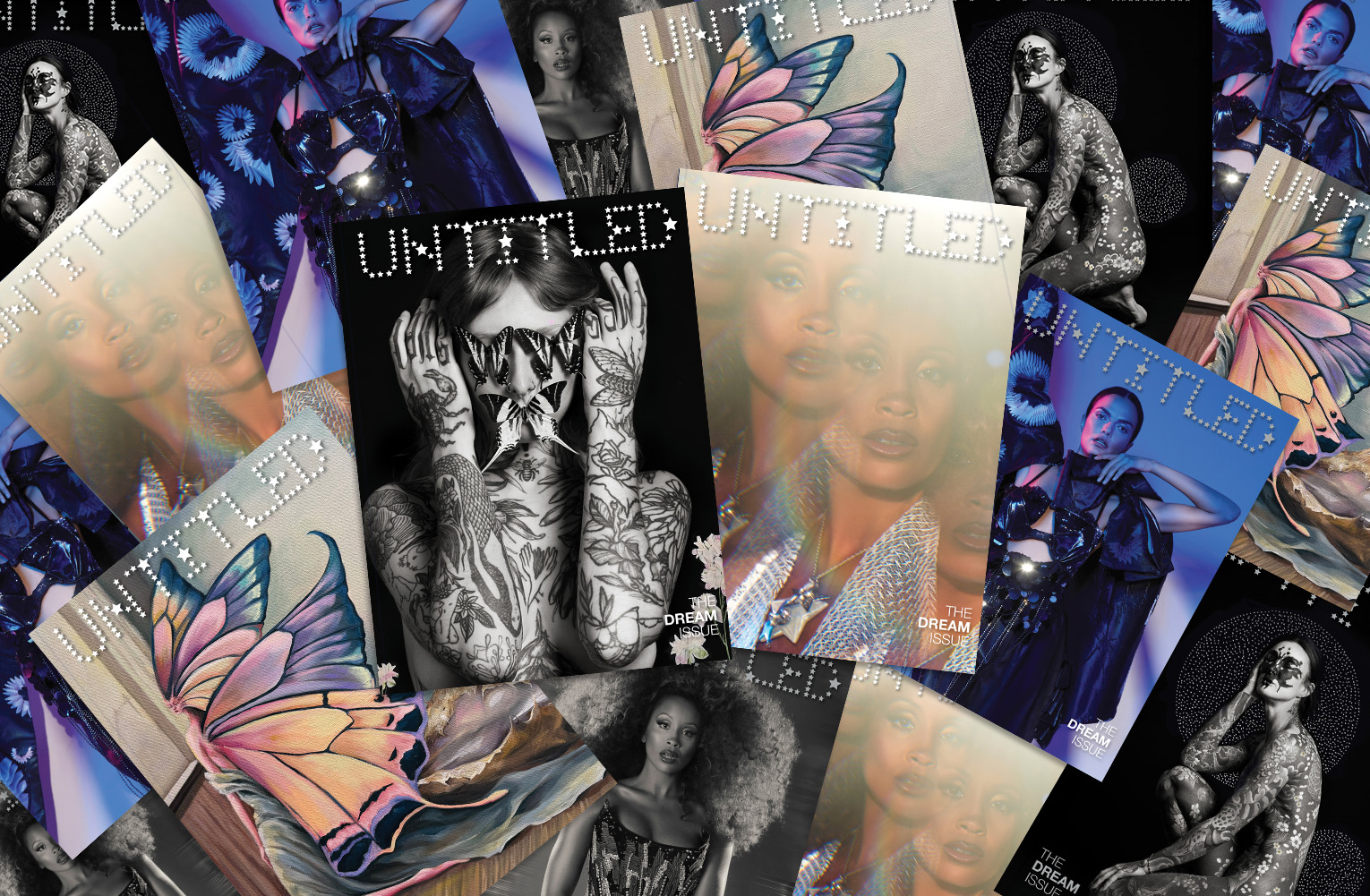
Interview by Indira Cesarine for The Untitled Magazine’s DREAM Issue, available now for purchase – visit untitled-magazine.shop to order your copy.