FROM RED TO BLUE: THE NEW FACES RESHAPING AMERICAN POWER
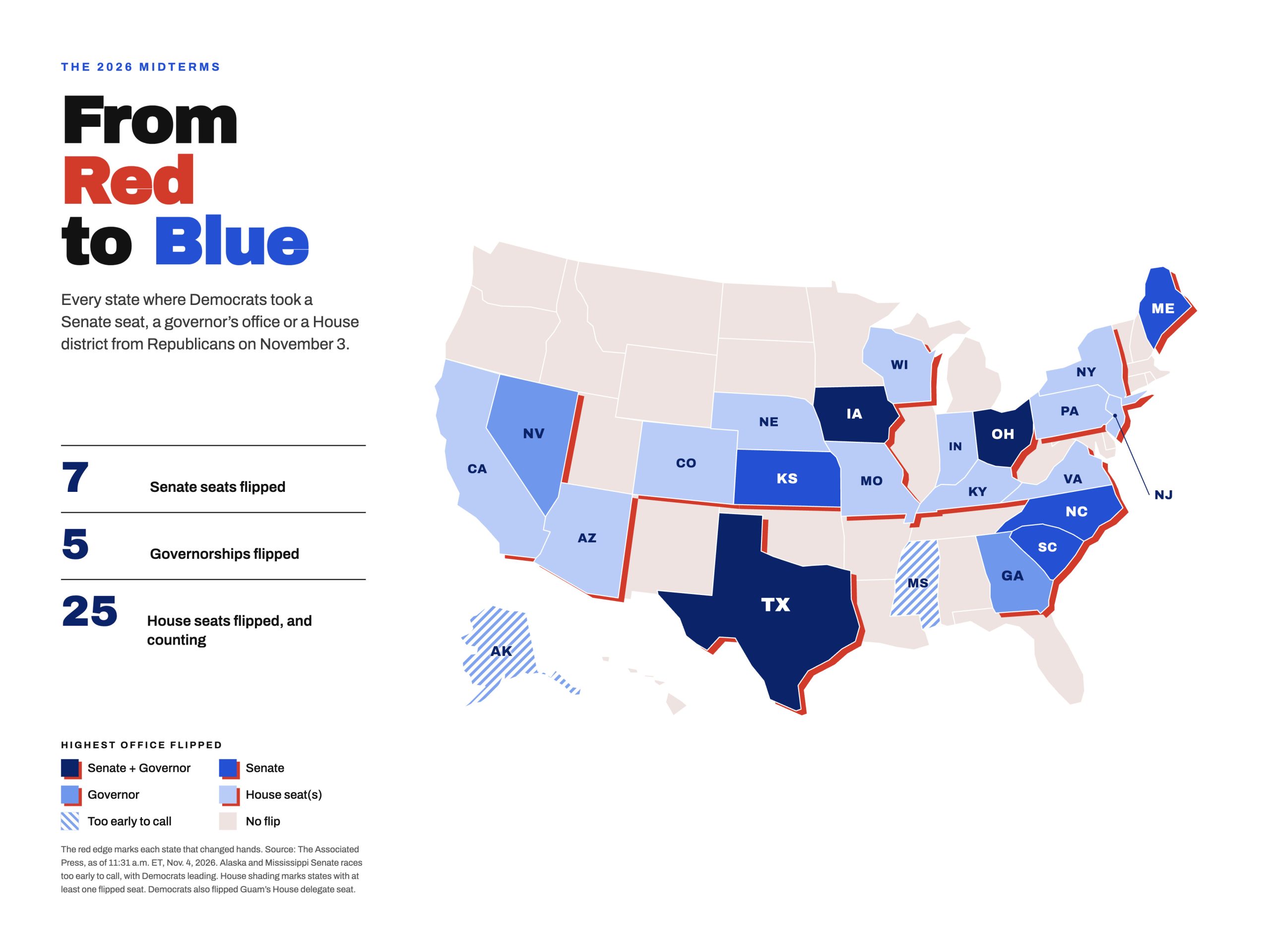
On November 3, 2026, American voters did more than change which party controls Washington. They changed who holds power. Democrats flipped seven Republican-held Senate seats, in Iowa, Kansas, Maine, North Carolina, Ohio, South Carolina, and Texas. They won the House outright, flipping more than two dozen seats, with some races still too close to call. They also took five governor’s offices, in Texas, Georgia, Nevada, Ohio and Iowa. With those wins, Democrats will hold a majority of governorships for the first time in 16 years. The party won the largest House popular-vote margin for either party since 1974. It is also only the fifth time since World War II that one party has flipped both chambers of Congress in a midterm.
Women were at the center of that wave. At least a dozen Democratic women won seats long held by Republicans: three governorships, a Senate seat and at least nine House seats. Women were the Democratic nominees in 20 of the 41 most competitive Republican-held House districts. The night also produced a remarkable list of firsts. They include the first Black woman elected governor, the first Native American woman elected governor, the first Muslim senator, and the first openly gay man elected to the Senate.
THE GOVERNORS
View this post on Instagram
Keisha Lance Bottoms, Georgia
The former Atlanta mayor defeated billionaire Rick Jackson to become the first Black woman elected governor in U.S. history and Georgia’s first Democratic governor since 2002. Bottoms succeeds Brian Kemp. She previously served in the Biden White House as a senior adviser and director of the Office of Public Engagement. She is at least a fifth-generation Georgian and the daughter of 1960s singer Major Lance. She ran on expanding Medicaid, guaranteeing pre-K for every 4-year-old and lowering taxes for working families. She also confronted Jackson in person over an ad that targeted her husband, telling him: “I’m fair game, but please stay away from my family.”
Gina Hinojosa, Texas
In the night’s most shocking flip, the Austin state representative unseated Greg Abbott, who had governed for almost 12 years. Trump had carried Texas by nearly 14 points two years ago. Hinojosa becomes the first Hispanic governor of Texas and the first Democrat elected governor since 1990. A South Texas native and one of the legislature’s fiercest critics of Abbott’s school voucher program, she ran against what she called the “Abbott corruption tax.” Her pitch was that billionaire donors had driven up everyday costs for Texans. One of her most talked-about ads ended with the line: “My pronouns are Mom, Texan, and soon to be: Governor.” Democrats also flipped the Texas lieutenant governor, attorney general and railroad commissioner offices, ending a statewide drought of more than three decades.
Amy Acton, Ohio
The physician who led Ohio’s COVID-19 response defeated Vivek Ramaswamy. She is the first woman elected governor of Ohio and the first Democrat elected to the office in roughly 15 years. She will also be the first Jewish governor in the state’s history. Her debut ad opened with a memory from childhood: “I was 12, and we were living in a tent.” Late in the race, Ramaswamy’s campaign spent $4 million promoting an ad featuring Acton’s estranged mother calling her a liar. Acton’s brother publicly condemned the ad, and a late poll found it moved more voters toward Acton than away from her.
Rob Sand, Iowa
The state auditor defeated Republican Zach Lahn to become Iowa’s first Democratic governor in 20 years. He had been the only Democrat holding statewide office in Iowa. Sand built his name prosecuting the largest lottery-rigging scheme in U.S. history. He ran as a pragmatic, rural-rooted moderate and amassed an $18 million war chest.
Aaron Ford, Nevada
The two-term attorney general unseated Republican Joe Lombardo, 51.7% to 44.2%, and becomes Nevada’s first Black governor. Ford had already made history in 2019 as the first Black American to hold statewide constitutional office in Nevada.
THE SENATE
Annie Andrews, South Carolina
The Charleston pediatrician became the first Democrat elected to the Senate from South Carolina in a generation and the first woman ever elected to represent the state in the Senate. She launched her campaign in May 2025 against Lindsey Graham with a viral, three-and-a-half-minute video. In it she used children’s X-rays to make her case on vaccines and gun violence. After Graham’s sudden death in July, she defeated his sister, Darline Graham, whom the governor had appointed to the seat. When Trump attacked her with an anti-transgender slur, she kept her focus on costs, replying that if name-calling could lower gas prices, he could call her anything he wanted.
James Talarico, Texas
The 37-year-old state representative, a former middle school teacher and Presbyterian seminarian, defeated Ken Paxton. He becomes the first Democrat elected to the Senate from Texas since 1988. Talarico was born a year after Lloyd Bentsen, the last Democratic senator from Texas, was re-elected. He first won office in 2018 by flipping a Republican district in the Austin suburbs. He won his Senate primary over Rep. Jasmine Crockett with a populist message rooted in his Christian faith.
Troy Jackson, Maine
A fifth-generation logger from Allagash, a tiny town at Maine’s northern tip, Jackson unseated Susan Collins after nearly three decades in office. He served 20 years in the Maine legislature, six of them as Senate president, winning a northern district even as the region turned Republican. Jackson entered the race with roughly 100 days to go, after the previous Democratic nominee’s campaign collapsed.
Adam Hamilton, Kansas
The founding pastor of the Church of the Resurrection, the largest United Methodist congregation in the country, defeated Republican Roger Marshall. Republicans had won every Kansas Senate race for nearly a century. Hamilton is the first Kansas Democrat sent to the Senate since George McGill in 1930. When Marshall called him “too woke for Kansas,” Hamilton shot back that if Jesus stood before them, Marshall would call him woke too.
Josh Turek, Iowa
The state representative defeated Rep. Ashley Hinson for the open seat left by retiring Sen. Joni Ernst. Turek was born with spina bifida, which he attributes to his father’s exposure to Agent Orange in Vietnam. He had 21 surgeries before age 12, then competed in four Paralympic Games and won two gold medals in wheelchair basketball. He now holds the Senate seat once held for three decades by Tom Harkin, the chief sponsor of the Americans with Disabilities Act.
Roy Cooper, North Carolina
The two-term former governor defeated Michael Whatley, Trump’s handpicked candidate. It was the Democrats’ first Senate flip of the night.
Sherrod Brown, Ohio
The former senator, who lost his seat in 2024, came back to defeat Republican Sen. Jon Husted.
Mary Peltola, Alaska (too close to call)
The first Alaska Native ever elected to Congress is in a near-tie with incumbent Dan Sullivan. Ranked-choice tabulation is scheduled for November 18, and the final result is not expected before then. She ran on her longtime motto, “fish, family and freedom,” and on her family’s fishing life on the Kuskokwim River.
THE HOUSE
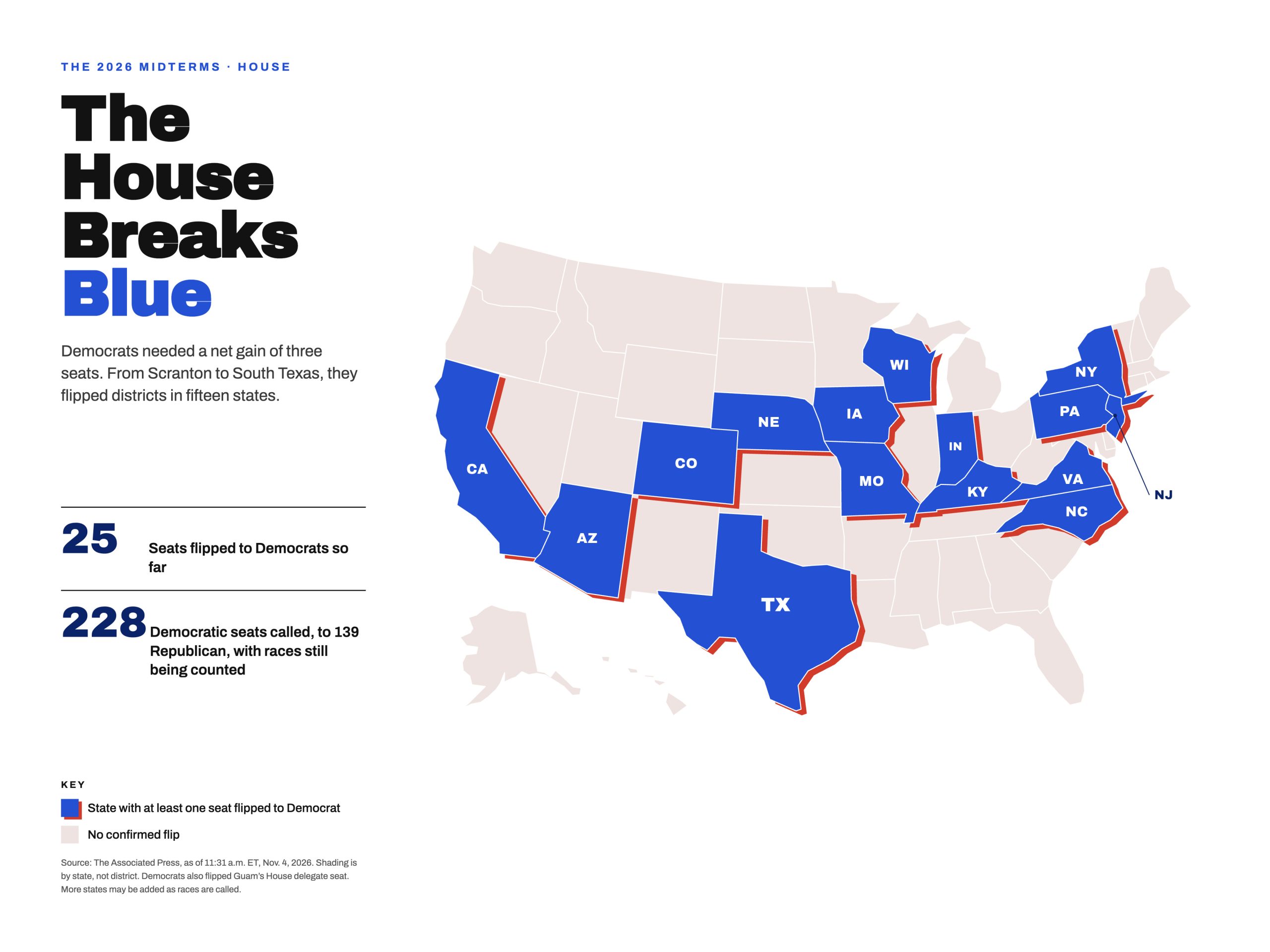
Paige Cognetti, Pennsylvania’s 8th – The mayor of Scranton, Joe Biden’s birthplace, defeated first-term Rep. Rob Bresnahan by close to 20 points. She ran on an anti-corruption message and hammered Bresnahan over his stock trades.
Rebecca Bennett, New Jersey – The former Navy helicopter pilot unseated Rep. Tom Kean.
Rebecca Cooke, Wisconsin’s 3rd – Cooke unseated Rep. Derrick Van Orden, two years after losing to him by fewer than three points.
Cait Conley, New York’s 17th – The military veteran and former national security official flipped a Hudson Valley seat. It was one of just three Republican-held districts in the country that voted for Kamala Harris.
Shannon Taylor, Virginia – The central Virginia prosecutor defeated 10-term Republican Rob Wittman. She focused tightly on corruption and highlighted her work prosecuting crimes against women and children.
Christina Bohannan, Iowa’s 1st – On her third try, she defeated Rep. Mariannette Miller-Meeks, 53.6% to 42.8%. She had lost to Miller-Meeks in 2024 by about 800 votes.
Sarah Trone Garriott, Iowa’s 3rd – The state senator defeated Rep. Zach Nunn.
Denise Powell, Nebraska’s 2nd – The political organizer defeated Omaha City Council member Brinker Harding.
JoAnna Mendoza, Arizona’s 6th – The openly LGBTQ+ Marine veteran defeated Republican Rep. Juan Ciscomani.
Map: The Untitled Magazine. Source: The Associated Press, as of 11:31 a.m. ET, Nov. 4, 2026.
Bobby Pulido, Texas’s 15th – The Latin Grammy-winning Tejano singer defeated Republican Rep. Monica De La Cruz.
Jamie Ager, North Carolina’s 11th – The farmer won a mountain district Trump carried by more than 9 points.
Mitchell Berman, Wisconsin’s 1st – Berman defeated Rep. Bryan Steil, a high-profile committee chair, in Paul Ryan’s former district.
Bob Harvie, Pennsylvania’s 1st – Harvie defeated longtime Rep. Brian Fitzpatrick.

BREAKING BARRIERS: HISTORIC FIRSTS
- Keisha Lance Bottoms ended 250 years of American history without a Black woman serving as governor. She will also be Georgia’s first governor of color.
- Deb Haaland, a Laguna Pueblo citizen and former interior secretary, won New Mexico’s governorship. She is the first Native American woman elected governor in U.S. history. Speaking on election night, she noted that it was the nation’s 250th year.
- Aaron Ford becomes Nevada’s first Black governor. He, Bottoms and Wisconsin’s David Crowley, who held his state for Democrats, are all Black Democrats elected governor on the same night.
- Gina Hinojosa becomes Texas’s first Hispanic governor. Xavier Becerra becomes California’s first Latino governor.
- Abdul El-Sayed, a progressive physician, defeated Mike Rogers in Michigan to become the first Muslim elected to the U.S. Senate.
- Peggy Flanagan, a White Earth Band of Ojibwe member, defeated Michele Tafoya in Minnesota. She will be the first Native American woman to serve in the Senate.
- Juliana Stratton won in Illinois, becoming the fifth Black woman ever elected to the Senate. Next term, for the first time, three Black women will serve in the Senate at once: Stratton, Lisa Blunt Rochester and Angela Alsobrooks.
- Amy Klobuchar becomes Minnesota’s first female governor.
- Across the aisle, Republican Byron Donalds became Florida’s first Black Republican governor.
THE RAINBOW WAVE: LGBTQ+ VICTORIES
View this post on Instagram
Chris Pappas, New Hampshire
Rep. Chris Pappas defeated former Republican Sen. John E. Sununu to become the first openly gay man elected to the U.S. Senate. It is only the third time an openly LGBTQ+ person has been elected to the chamber, following Tammy Baldwin, the first in 2012. Pappas, 46, has represented New Hampshire’s 1st District since 2019. Before Congress he served three terms on the state’s Executive Council. In Congress he co-chaired the Equality Caucus and was a lead sponsor of major pro-LGBTQ+ bills. His identity wasn’t central to his campaign, which focused on affordability and health care. On election night, his husband, Vann Bentley, stood beside him as he addressed supporters in Manchester. Pappas told the Washington Blade he was proud of who he is, but prouder that New Hampshire welcomes people from all walks of life.
- J.D. Ford, a longshot candidate, unseated Republican Rep. Victoria Spartz. He becomes Indiana’s first openly gay member of Congress.
- Jeremy Moss becomes Michigan’s first openly LGBTQ+ member of Congress.
- JoAnna Mendoza, an openly LGBTQ+ Marine veteran who served during the “don’t ask, don’t tell” era, flipped Arizona’s 6th District, defeating Republican Rep. Juan Ciscomani.
- Sarah McBride, the first openly transgender member of Congress, easily won re-election in Delaware.
- At the state level, Bentley Hudgins becomes Georgia’s first openly transgender and nonbinary state lawmaker.
WHAT COMES NEXT

When the new Congress convenes in January, Trump’s final two years will look very different from his first two. Since 2025, a Republican House and Senate passed his sweeping tax cuts and largely shielded his administration from tough scrutiny. That era ends with this election. Democrats will now run the committees, hold subpoena power and have authority to investigate the administration. Incoming House Oversight leaders have already named immigration enforcement and ICE detention practices as top priorities. In the Senate, Democrats will control which nominees and federal judges get confirmed. They can also scrutinize the war with Iran, raising its political cost even without directly limiting military operations. The family’s expanding business interests, from cryptocurrency to AI to prediction markets, are also expected to draw investigators’ attention.
There are real limits. Trump keeps his veto and broad executive authority. Analysts expect him to lean even harder on executive orders as Congress stalls his agenda. Administration officials could defy subpoenas or fight them in court, delaying investigations for months or years. Talk of impeachment has already begun. But removal would require a two-thirds Senate vote that Democrats don’t have. The president, for his part, told The New York Times he will accept the results. He also told Fox News he did not see the losses as a hit on him.
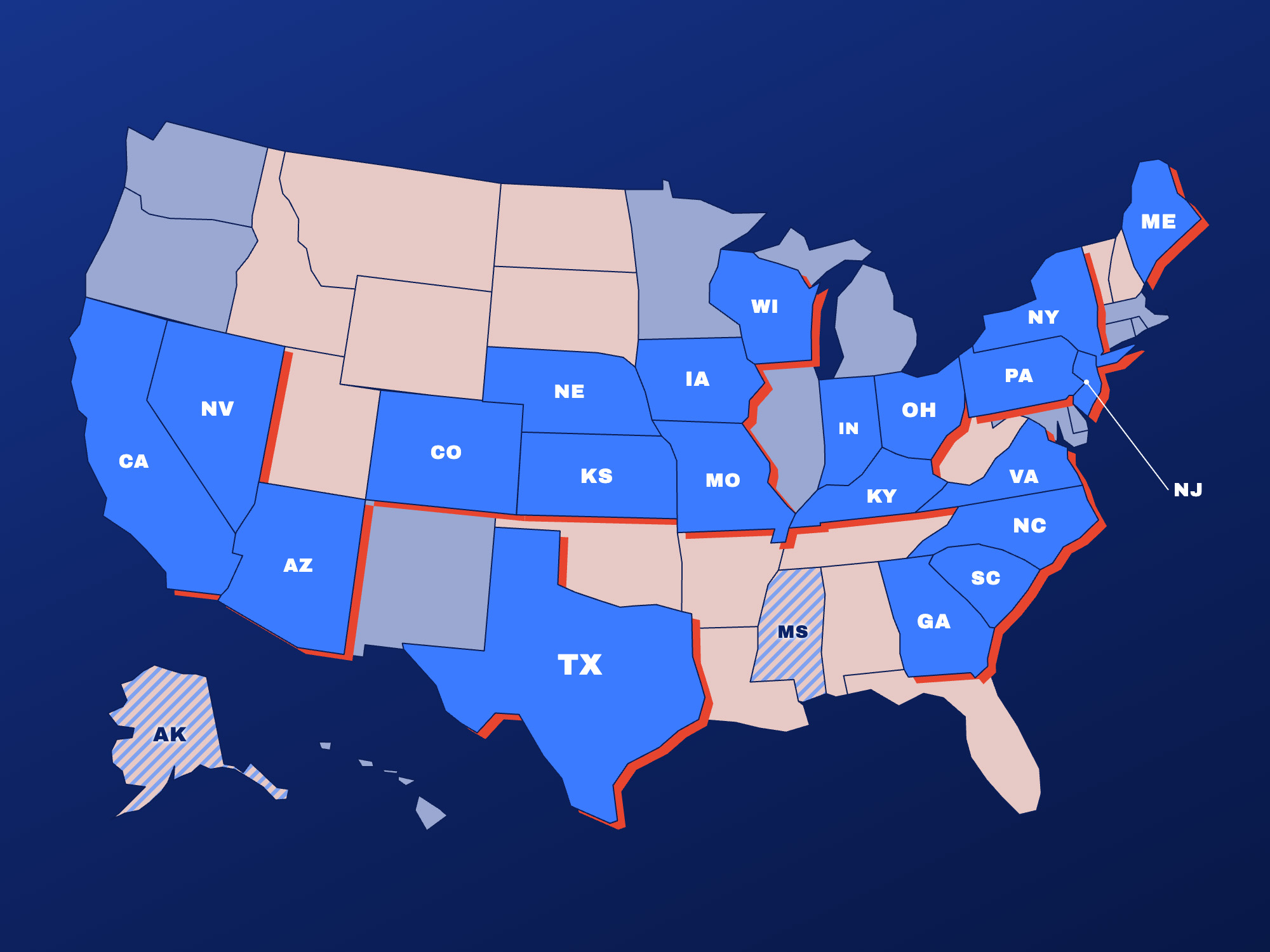
The impact reaches well beyond Washington. Democrats will hold most of the nation’s governorships for the first time in 16 years. They also broke the Republican supermajority in Florida’s legislature, flipped the Wisconsin Senate and the North Carolina House, and won full control of Pennsylvania’s government.
Yet the most lasting legacy of November 3, 2026 may be who won. A pediatrician in South Carolina, a former mayor in Georgia, and a doctor who once lived in a tent in Ohio. A logger from Maine’s north woods, a Paralympic champion in Iowa, a Tejano star in South Texas. Together they form a new class of leaders who look more like the country than any before them. Their victories leave both parties with something to absorb as the country turns toward 2028: voters in states long considered out of reach are willing to change course, and they are willing to elect people who have never held power before.