DREAM ISSUE EXCLUSIVE: VICTORIA ROSE ON WEARABLE SCULPTURE, FOREST SPIRITS, AND THE INTELLIGENCE OF NATURE
Victoria Rose gives physical form to the unseen intelligence of the natural world. Working across wearable sculpture, costume, photography, and performance, she transforms mycelial networks, moonlight, plant sentience, and forest energies into elaborate humanoid beings. Her life-sized creations are not intended as literal representations of nature, but as manifestations of the forces she perceives moving through it.
Nature is both the foundation of Rose’s creative practice and her full-time calling. She primarily works at a nature school, an experience that deepens her attentive relationship with the landscapes and organic systems that inspire her sculptures. Her work has been published in Enchanted Living and displayed at the Atlanta Marriott Marquis and Lamar Arts Gallery. Built from found and recycled textiles, her figures combine antique lace, crochet, curtains, bridal veils, pearls, beads, and thrifted garments. Frayed hems and discarded fabrics coexist with opulent details, reflecting the entanglement of beauty, decay, and regeneration.
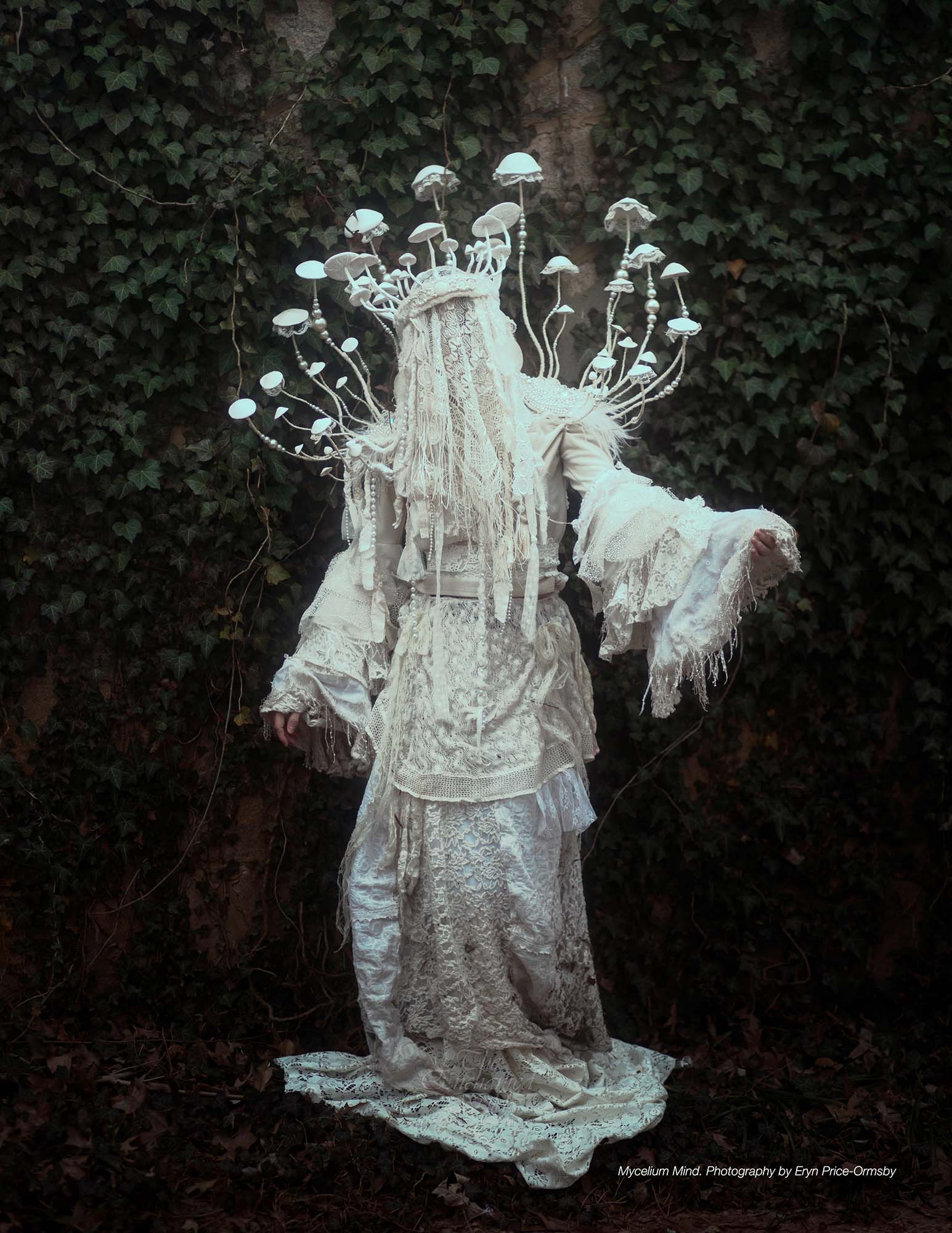
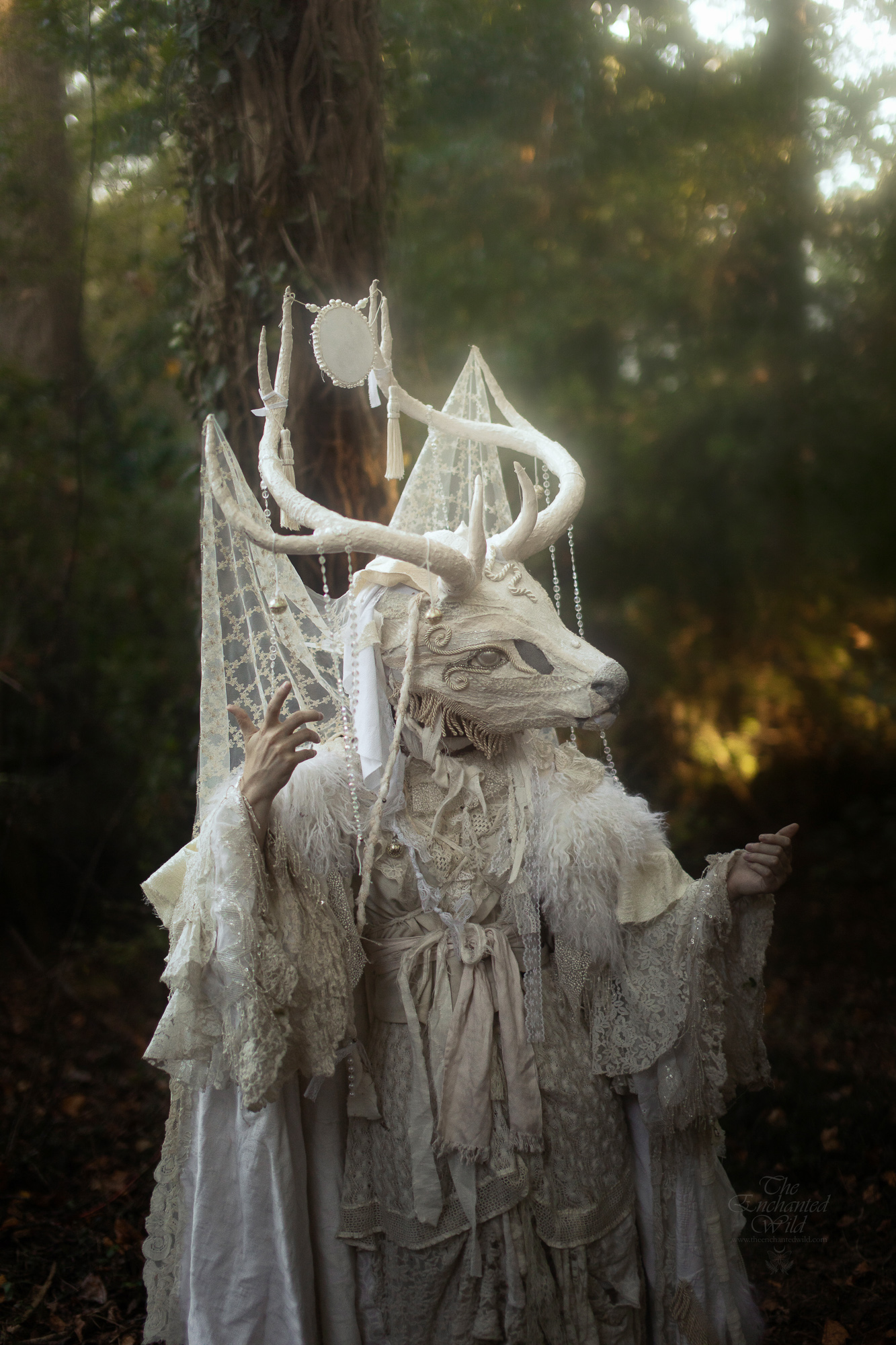
In recent years, Rose has worked almost exclusively in shades of white, allowing variations in material and texture to shape each character’s visual language. When worn and photographed in the landscape, the sculptures become more than static objects. Fabric moves, concealed bells sound, and performers temporarily embody the spirits she imagines. Created in collaboration with photographer Eryn Price-Ormsby, images such as “Mycelium Mind” and “Mushrooms & Moons” appear to document encounters with beings that have briefly crossed from an invisible realm into physical form. For Rose, these figures emerge much like waking dreams, often arriving in her imagination fully formed before being painstakingly assembled by hand.
Your wearable sculptures personify forces in nature that cannot normally be seen, including mycelial intelligence and plant sentience. What first inspired you to give these hidden systems a physical, human-like form?
Giving the mycelium a humanoid form is intended to make visible the intelligence we typically overlook. It is a common and human-centric view that our intelligence is the only kind that counts, and displaying the mycelium in human shapes is designed to overcome that prejudice.
In “Mycelium Mind,” you imagine the underground mycelial network as a goddess-like figure, the living mind of the forest. How did you develop the character and visual language of this work?
I knew I wanted to give her a push and pull of luxury and decay. For each strand of pearls, there is also a torn edge; for every yard of expensive lace, there is a frayed hem. I gave her the Medici collar and long, impractical sleeves to evoke the idea of royalty, and I added a shroud to remove her from her humanness and instill a sense of sacredness.
Your recent sculptures are created entirely in shades of white. What led you toward this monochromatic palette, and how does removing color change the way viewers experience their textures and forms?
The first monochrome piece I made was a dress designed as the bottom half of a mushroom costume. I was so enthralled by the focus on texture I was able to achieve without color that almost everything I’ve made since has been in that style. The lack of color makes people look deeper at the fabrics themselves, which encourages them to notice the found and eclectic nature of the textiles: old curtains, factory lace, handmade crochet, tablecloths, bridal veils, expensive beaded trims, and thrifted skirts. With less to observe, the texture can be more fully appreciated and the story better understood.
These works exist somewhere between sculpture, costume, mythology, and performance. What does the wearable element allow you to express that a static sculpture could not?
Although cosplay and fashion are what typically come to mind when costumes are brought up, it is my personal opinion that dressing up can be sacred. Humans have embodied their myths, gods, and spirits for thousands of years. Dressing as the things we fear, honor, and wish to attract or repel is an ancient practice, and I believe it still holds validity in our modern world. A static sculpture or mannequin would communicate the visual aspects of what I see in the forest, but it would not truly connect with the spiritual elements like a living person can.
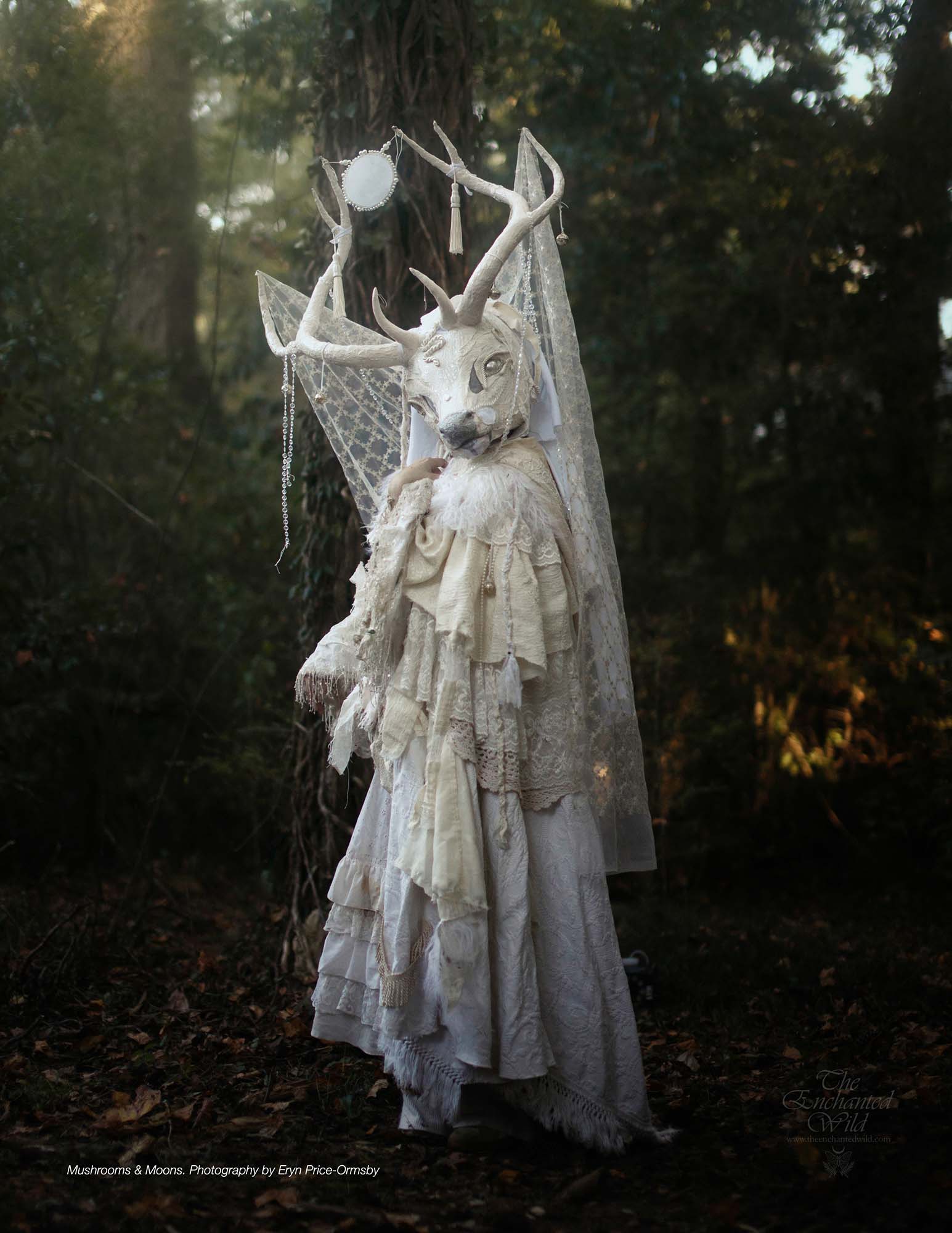
“Mushrooms & Moons” transforms its wearer into a fantastical antlered being that feels part animal, part deity, and part forest spirit. What mythology or natural symbolism informed this character?
The moon faun is designed to communicate how I feel about moonlight filtering through trees. I personified moonlight as a deer, with pearl eyes, lace fur, and glass beads. I wanted her to feel like a dream, like something non-corporeal briefly taking physical form, not a literal animal. That is why I often do not try to directly mimic the natural look of what I am representing, but instead have it manifest as a collection of found textures.
Dreams often give visible form to subconscious thoughts and unseen energies. How does your work similarly make the invisible world of nature tangible, and have dreams ever directly influenced one of your creations?
I consider many of my works to be manifestations of my waking dreams. Often, they appear to me fully formed, with no artistic process or decisions involved, no conscious thought or direction. Like a dream, they walk into my field of view, or I see a moment of them dancing or moving through the trees.
Dreams make the subconscious into a visual experience, and through my art, I attempt to give physical form to the non-physical things I perceive in nature.
When your sculptures are photographed in the landscape, they seem to become inhabitants of their own otherworldly realm. How important are setting, photography, and the presence of a performer to completing the story of each piece?
I have been blessed to recently work with the amazing photographer Eryn Price-Ormsby. It is her artistic eye that places the spirits in their environment and finishes the story I began. I always want the background, poses, and atmosphere to further support the emotions and message I had in mind, and her artistry is perfect for capturing the ethereal beauty of forest spirits.
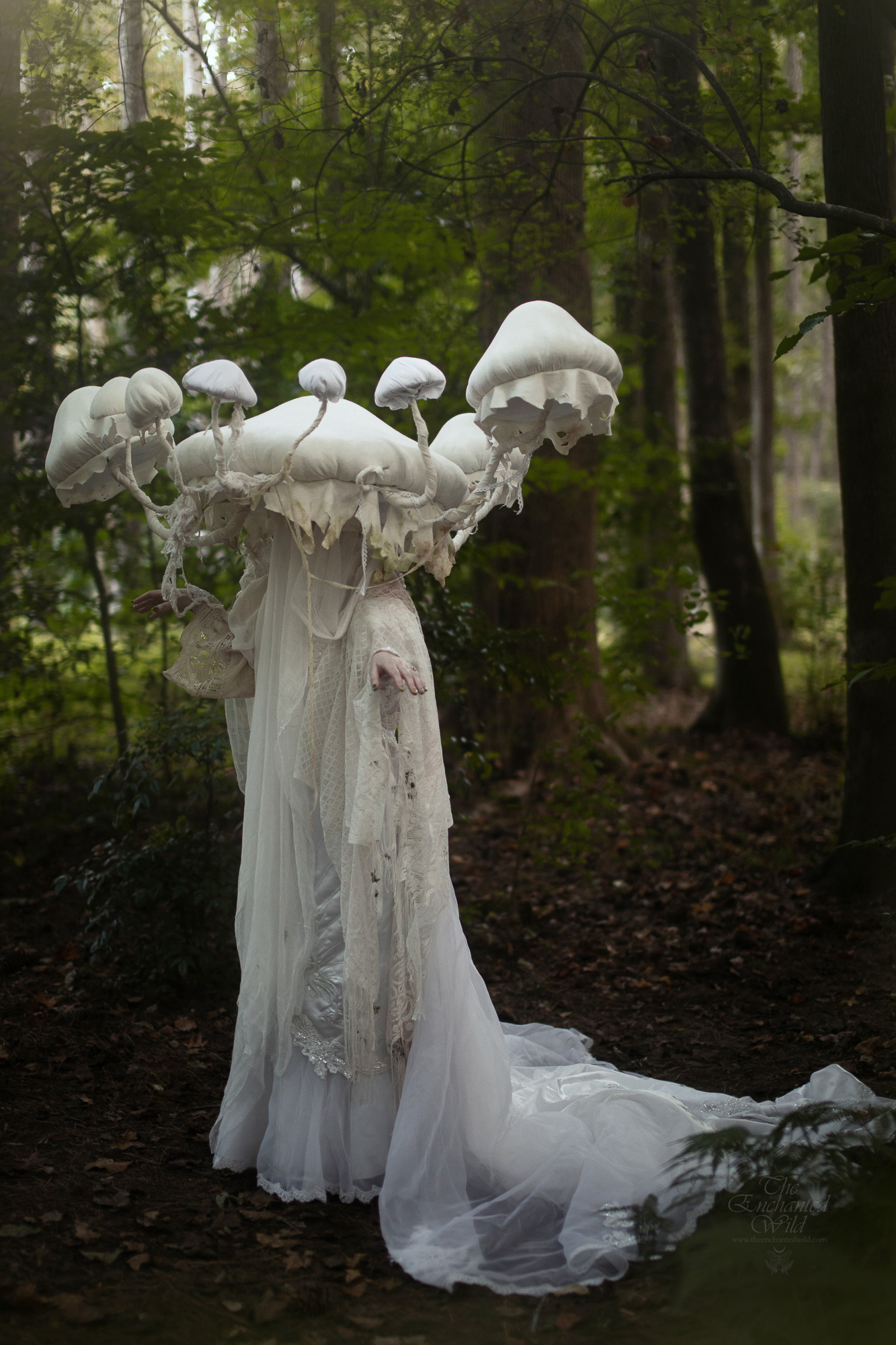
You have created seven spirits within this evolving body of work. How are these beings connected, and what aspects of the natural world are you hoping to personify next?
Quite literally, they are connected by having interchangeable pieces. Stylistically, they are all created in the highly textured, monochrome look, and thematically, they each embody the intelligence of nature.
My next piece is perhaps a touch overly ambitious, as it involves stilts, puppetry, animatronics, and possibly two wearers. Intended to be the final piece, it will be an ancient forest spirit on four legs with a variety of animal and theatrical elements.
Do you ever create performances, rituals, or immersive experiences that bring these sculptural characters to life? If so, how do movement, setting, and interaction with an audience shape the work?
These works are reflective of my spiritual experiences and are occasionally involved in my practice. Movement is important, as many of the looks are designed with strategically weighted fabrics that splay out when moving. Many have bells or rattles hidden within, or layers of fabric that are not seen unless the wearer is spinning. The moon faun, for example, has a cloak with dozens of tiny silver bells sewn under the lace.
Interview by Indira Cesarine for The Untitled Magazine’s DREAM Issue, available now for purchase – visit untitled-magazine.shop to order your copy.